Table of Contents
Why 5G Networks Require Extremely Precise Time Synchronization
In traditional data networks, millisecond-level latency is usually perceived only as slightly slower webpage loading or minor application delays. However, in 5G networks, time synchronization has become a fundamental requirement that directly impacts wireless performance. The required synchronization accuracy is typically within tens of nanoseconds. To put this into perspective, one nanosecond is only one-billionth of a second.
The reason for such extreme precision is that many key 5G technologies rely on highly accurate timing coordination between multiple radio elements. Technologies such as beamforming, massive MIMO, and TDD (Time Division Duplex) uplink/downlink switching require different antenna units to operate with near-perfect synchronization.
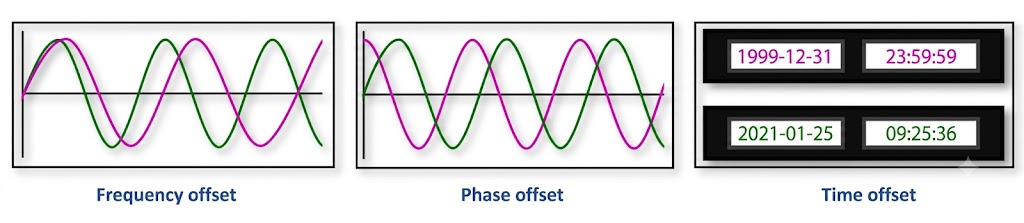
When timing errors occur between base stations or antenna elements, wireless signals may no longer combine as expected, causing phase interference and reducing spectral efficiency. From the user perspective, this may appear as a normal signal indicator while actual throughput drops significantly. In severe cases, timing instability can even affect base station operation.
Therefore, 5G networks require not only high-speed connectivity, but also a deterministic network infrastructure capable of delivering highly accurate timing synchronization.
5G Synchronization Challenges: How PTP, SyncE, and GNSS Build a Deterministic Network
Traditional Ethernet networks are inherently asynchronous packet-based networks. Packet sizes vary, traffic conditions constantly change, and buffering and queuing inside network devices introduce unpredictable delays. These factors create Packet Delay Variation (PDV), making it challenging to distribute precise timing signals across conventional Ethernet networks.
To achieve deterministic timing over non-deterministic packet networks, modern 5G deployments typically rely on a combination of GNSS, SyncE, and IEEE 1588v2 PTP.
- GNSS (Global Navigation Satellite System):GNSS serves as the primary reference clock source for telecommunications networks. It provides an accurate global time reference, allowing synchronization nodes and base stations to align their clocks with UTC time.
- SyncE (Synchronous Ethernet):SyncE operates at the physical layer and enables Ethernet devices to recover and maintain a common frequency reference. It ensures that all network devices operate at the same clock rate, preventing long-term frequency drift.SyncE mainly provides frequency synchronization.
- IEEE 1588v2 PTP (Precision Time Protocol):PTP operates at the packet layer and distributes precise timing information across the network. It enables devices to synchronize phase and Time of Day (ToD), allowing them to maintain accurate information about the exact date, time, and nanosecond-level timing reference
In real-world telecom networks, PTP, SyncE and GNSS are typically deployed together: SyncE provides a stable frequency reference,PTP provides precise phase and time synchronization;GNSS provides the global reference time source . Together, these technologies transform traditional Ethernet infrastructure into a deterministic timing network, enabling high-precision synchronization for 5G radio access networks, Open RAN deployments, and future industrial applications.
What is Open RAN (ORAN) ?
Open O-RAN Architecture: How CU, DU, and RU Redefine 5G Base Stations
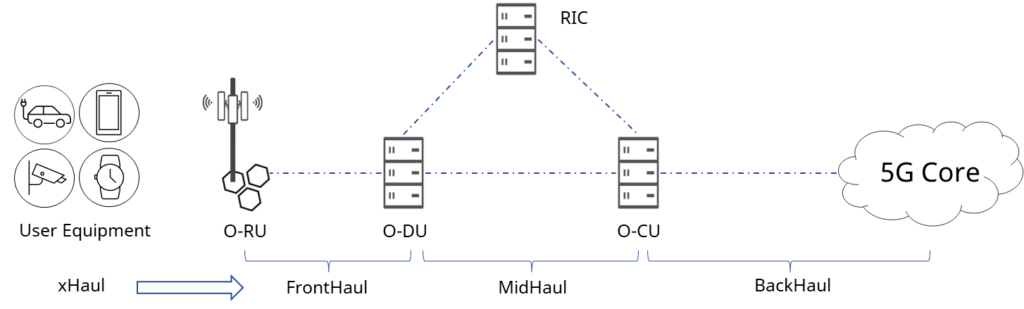
With the evolution of Open RAN (Open Radio Access Network), traditional monolithic base station architectures are moving toward a more open and disaggregated model.
In the O-RAN architecture, traditional integrated base station functions are separated into three independent components:CU (Central Unit),DU (Distributed Unit) and RU (Radio Unit). This disaggregated architecture enables centralized intelligence, edge-based real-time processing, and open network interfaces.
CU (Central Unit) — The Network Intelligence Layer
The CU is responsible for higher-layer network control and management functions, including:
- User management
- Network policy control
- Mobility management
- Control-plane processing
Because CU functions are less sensitive to real-time latency requirements, they are typically deployed in:central data centers,cloud platforms,regional network hubs. The CU connects upward to the 5G Core Network (5GC) and connects downward to the DU through the Midhaul network (typically based on 3GPP Split 2 architecture).
DU (Distributed Unit) — The Real-Time Radio Processing Node
The DU acts as the key computing layer between the core network and radio equipment. It performs latency-sensitive radio processing tasks, including:
- Radio resource scheduling
- Beamforming computation
- Massive MIMO signal processing
- Real-time protocol processing
Due to its strict latency and performance requirements, the DU is typically deployed closer to the edge, such as: edge data centers,aggregation sites and Regional telecom facilities
The DU connects upward to the CU through Midhaul and downward to the RU through Fronthaul based on O-RAN Split 7.2 architecture.
RU (Radio Unit) — The Radio Access Interface
The RU is deployed closest to end users and is responsible for:
- Radio signal transmission and reception
- Digital-to-RF and RF-to-digital conversion
- Antenna-side signal processing
Typical RU deployment locations include: cellular towers,street-level small cells and indoor coverage systems,high-density environments such as subway stations
The RU connects to the DU through the Fronthaul network and communicates with user equipment (UE) through wireless interfaces.
5G ORAN Fronthaul: The Key Battlefield for Precision Timing in O-RAN Networks

The “centralized CU, distributed DU, and front-end RU” architecture brings significant benefits:
- Reduces vendor lock-in
- Enables multi-vendor interoperability
- Improves deployment flexibility
- Accelerates network innovation
However, this openness also places higher demands on the underlying transport network. Among all network segments, the Fronthaul network between DU and RU has become one of the most critical areas because O-RAN Split 7.2 requires:
- Extremely low latency
- High bandwidth Ethernet connectivity
- Precise time synchronization
- High reliability
Therefore, Ethernet switches supporting PTP, SyncE, high-performance packet processing, and telecom-grade synchronization are becoming essential components of next-generation 5G infrastructure.
Synchronization Topology Selection in 5G Fronthaul Networks
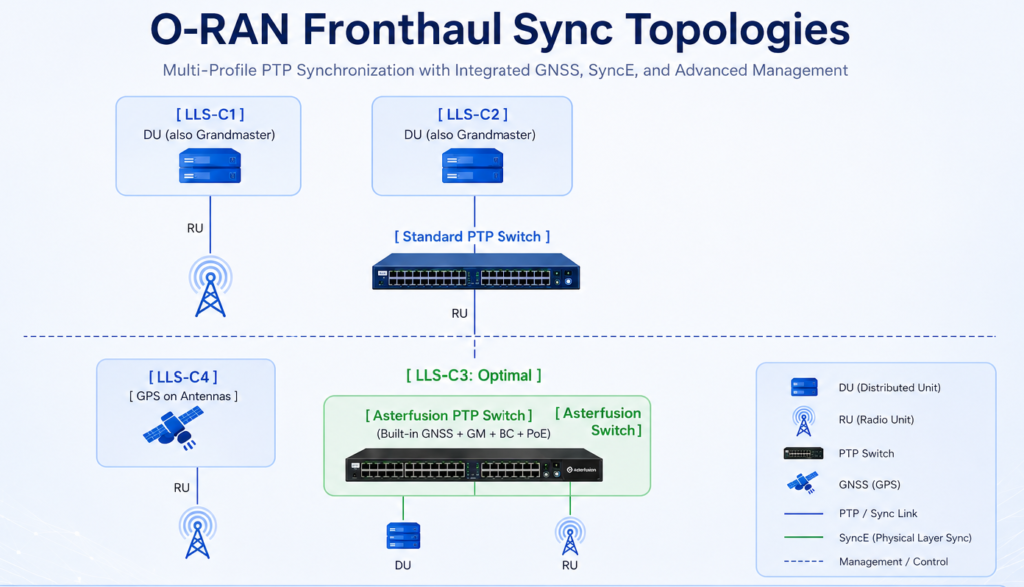
In the fronthaul network (the transmission link from DU to RU), the O-RAN Alliance formally defines four clock distribution topologies (LLS-C1 through LLS-C4):
- LLS-C1 (Direct DU-to-RU Connection): Straightforward and simple, but offers poor scalability, as the DU’s physical ports cannot accommodate a high density of small cell access.
- LLS-C2 (DU as Grandmaster with Switch Forwarding): Places an excessive processing load on the DU, and clock signals are highly prone to jitter if network congestion occurs at intermediate switches.
- LLS-C4 (Local GPS per RU): Cost-prohibitive and completely unviable in environments where satellite signals are obstructed, such as indoors, underground, or in subways.
- LLS-C3 (Centralized Fronthaul Timing — Optimal Solution): Deploys a dedicated PTP switch with integrated Grandmaster (GM) capabilities between the DU and RU to achieve unified, high-precision clock distribution and management.
Asterfusion 25G Switches for 5G O-RAN: Enabling Nanosecond-Level Synchronization for Next-Generation Fronthaul Networks
In 5G networks built on the O-RAN Alliance open architecture, the fronthaul network between the Distributed Unit (DU) and Radio Unit (RU) has become one of the most demanding segments for timing synchronization. Beyond high-bandwidth and low-latency connectivity, fronthaul networks must provide nanosecond-level time and phase synchronization to support advanced 5G radio technologies, including beamforming, massive MIMO, and TDD scheduling.
Asterfusion CX306: All-in-One Timing Hub: Convergence of GNSS, SyncE, and PTP
To meet these stringent synchronization requirements, Asterfusion delivers a new generation of PTP-enabled Ethernet switching solutions designed for 5G xHaul networks. By integrating GNSS-based timing reference, Synchronous Ethernet (SyncE), and IEEE 1588v2 Precision Time Protocol (PTP) into a single high-performance platform, the CX306P-48S-M-H enables a simplified, highly accurate, and reliable timing architecture for O-RAN deployments.
Validated in real-world customer network environments, Asterfusion PTP switches provide the precision, stability, and scalability required to support next-generation 5G infrastructure.
GNSS (Global Navigation Satellite System) is a system that provides global positioning, navigation, and timing services using satellite signals. The well-known GPS is just one type of GNSS.

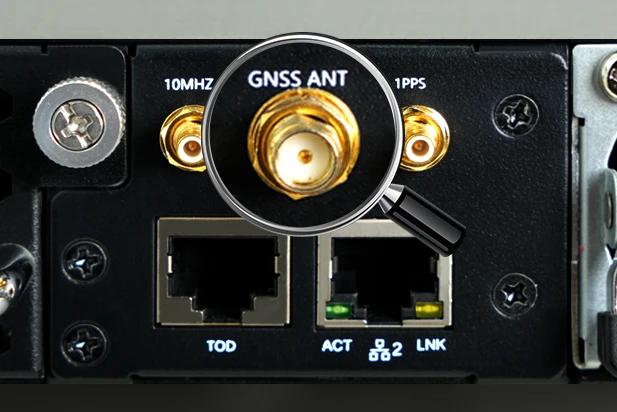
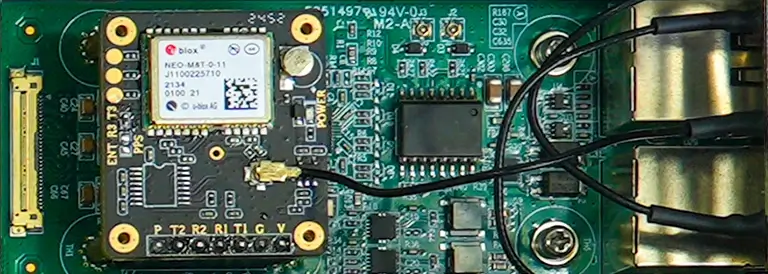
On the CX306P-48Y-M-H platform, a GNSS antenna SMA interface is available on the rear panel for connecting an external GNSS antenna. It supports concurrent reception of GPS/QZSS, GLONASS, BeiDou, and Galileo signals.
Inside the platform, the GNSS module uses a pluggable design, allowing for easy replacement and future upgrades as shown in the figure below. The pluggable GNSS module enhances the flexibility of the CX306P-48Y-M-H as a GNSS switch, allowing upgrades without impacting ongoing network synchronization.
The following figure shows the platform’s internal PTP (Precision Time Protocol, IEEE 1588v2) module, which is used to distribute precise time across the network.
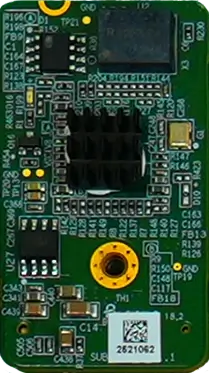
In operational mode, the antenna receives satellite signals and routes them through internal circuitry to the GNSS module, obtaining high-precision time synchronized with the satellites as the system reference clock.
Based on the reference time provided by the GNSS module, PTP processes the time signals and delivers them to the ASIC, distributing them across the network to achieve approximately 20 ns-level time precision.

Currently, our time synchronization solution has been successfully deployed in the media industry and can also meet latency-sensitive use cases such as 5G O-RAN fronthaul and financial timestamping.
Time Interfaces and PTP for Time-Sensitive Applications
As mentioned earlier, the GNSS module is optional. This allows the CX306P-48Y-M-H to function not only as a GNSS switch but also as a flexible time synchronization platform, leveraging multiple rear-panel interfaces—10 MHz, 1 PPS, and TOD—to support a variety of deployment scenarios.
- 10 MHz: Serves as a frequency reference signal. It indicates the rate at which the internal clock “ticks” but does not carry absolute time information (i.e., it does not provide the current time.). This interface is used for SyncE (Synchronous Ethernet) to achieve frequency synchronization.
- Connection method: The SMB interface connects to an external clock source via coaxial cable.
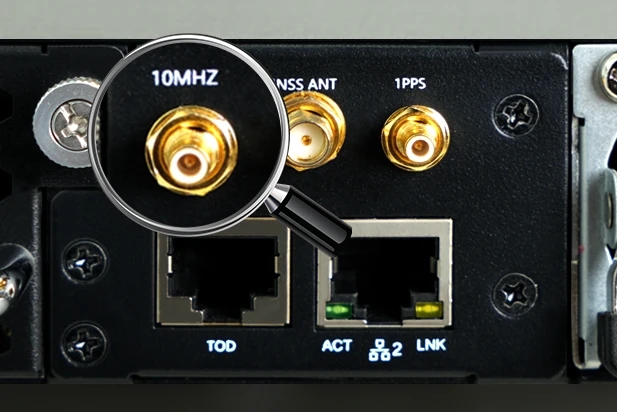
- 1 PPS: Provides a high-precision pulse-per-second signal for phase alignment. It marks the start of each second.
- Connection method: The SMB interface connects to an external clock source via coaxial cable.

- TOD(Time of Day): Provides complete time information, i.e., absolute time including year, month, day, hour, minute, and second. Used together with the 1 PPS signal, it enables high-precision absolute time synchronization.
- Connection method: The RJ45 interface connects to an external clock source via twisted-pair cable.
Simply put, 1 PPS tells the system “a new second has started,” while TOD indicates “this second corresponds to xx year xx month xx day xx hour xx minute xx second.”

The external time signals obtained through the above interfaces are transmitted via internal wiring to the PTP module. The module synchronizes the system clock in frequency, 1 PPS, and time information based on parameters such as 10 MHz, 1 PPS, and TOD. The processed time signals are supplied to the ASIC and distributed across the network, achieving approximately 20 ns-level precision.
Note: The interface next to TOD serves as a management port and is redundant with the front-panel interface to ensure high reliability.
To provide a clearer overview of the interface combinations and their applicable use cases, the following table summarizes them:
| Mode | Time Source | Connection Interface | Synchronization Type | Use Case |
| GNSS + PTP | Satellite clock (GPS/Galileo/BeiDou/GLONASS) | GNSS Antenna | High-precision absolute time synchronization | Commonly used in 5G O-RAN fronthaul and base station synchronization; also applied in latency-sensitive scenarios such as live broadcast and media & entertainment |
| 10 MHz + 1 PPS + ToD + PTP | External clock source | 10 MHz SMB 1 PPS SMB ToD RJ45 | High-precision absolute time synchronization | Suitable for streaming/OTT, media data centers, enterprise networks, and other synchronization scenarios |
| 1 PPS + ToD + PTP | External clock source | 1 PPS SMB ToD RJ45 | High-precision absolute time synchronization | Suitable for data centers, enterprise networks, and media/live broadcast environments |
| 10 MHz only | External clock source | 10 MHz SMB | Frequency synchronization (SyncE) | For scenarios where absolute time is not critical |
From the table, the following can be observed:
- GNSS + PTP mode: Provides high-precision (~20 ns) time synchronization, suitable for latency-sensitive applications such as 5G O-RAN, video broadcasting, and media environments.
- Non-GNSS module mode: Interface combinations can be flexibly selected based on requirements:
- 10 MHz + 1 PPS + TOD: Used with PTP to achieve high-precision network-wide synchronization, covering large-scale data centers, enterprise networks, or media environments.
- 1 PPS + TOD: Provides local clock frequency reference; applicable to the same scenarios as above.
- 10 MHz only: Focused on frequency synchronization; suitable for networks that do not require absolute time, supporting SyncE.
- Flexible interface selection: Deployment and budget considerations can guide interface choice to optimize high-precision time synchronization and network reliability.
Even without these external interfaces, the CX306P-48Y-M-H can still distribute time via PTP (IEEE 1588v2) and operate flexibly as either a Boundary Clock (BC) or Transparent Clock (TC).
Dual-Domain & Multi-Profile Support: ITU-T G.8275.1 and ITU-T G.8275.2
In real-world O-RAN networks, multi-vendor equipment co-deployment is standard practice, posing higher demands on synchronization systems.
Different standards serve distinct purposes:
- ITU-T G.8275.1: Delivers high precision, but requires full-path time synchronization support across the network.
- ITU-T G.8275.2: Offers greater flexibility, suitable for partially timing-aware network environments.
Asterfusion PTP switches support:
- Multiple PTP Profiles (G.8275.1 / G.8275.2, etc.)
- Simultaneous Multi-Domain Operation (Dual-Domain capability)
This achieves seamless interoperability with RUs/DUs from different vendors, smoothly evolving and upgrading the network without reconstructing the existing synchronization infrastructure. This capability allows operators to flexibly deploy varied synchronization architectures within a single network, realizing true Open RAN.
Automated Operations & Global Visibility via NETCONF/YANG
In 5G networks, achieving nanosecond-level precision is just the foundation; visibility and manageability are equally crucial. Asterfusion switches support standardized management protocols:
- NETCONF
- YANG Data Models
- Open APIs
These enable seamless integration with CUs, DUs, RUs, and O-RAN controllers, empowering the network with centralized configuration, monitoring, and management. Ultimately, this delivers end-to-end time synchronization visibility, enabling operators to track synchronization quality in real time via a unified control platform, quickly isolate issues, and perform optimizations.
QoS : Ensuring Priority for PTP Traffic
Traffic congestion is inevitable in live networks, especially during heavy loads on fronthaul links. If PTP packets contend for resources with standard data traffic, it leads to:
- Increased latency jitter
- Packet loss
- Degradation of synchronization accuracy
Asterfusion addresses this through a robust QoS mechanism featuring:
- Priority scheduling for PTP traffic
- Fine-grained queue management
- Hardware-level forwarding guarantees
This ensures that synchronization traffic gains prioritized passage even under heavy congestion, keeping latency stable and controllable while preserving timing accuracy.
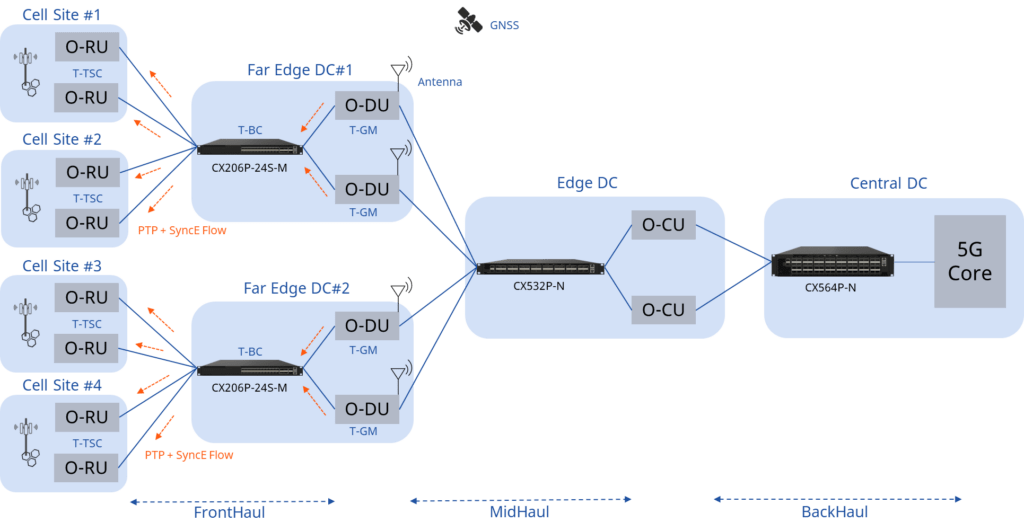
Asterfusion 5G O-RAN Mobile xHaul Transport Solution

Contact US !
- Join the discussion or leave your message in the Enterprise & Campus Column.
- To receive timely and relevant information from Asterfusion, sign up at AsterNOS Community Portal
- To submit a case, visit Support Portal.
- To find user manuals for a specific command or scenario, access AsterNOS Documentation
- To find a product or product family, visit Asterfusion-cloudswit.ch .
- To contact Sales, Send E-Mail to bd@cloudswit.ch


