Table of Contents
Introduction
Let’s deep dive into the topic after we watch this video.
What is WDM Optical Network? Simply put, it is a technology for “expanding” the capacity of optical fibers. Originally, a single optical fiber could only carry one signal. With WDM, it can carry dozens of signals simultaneously. This is Wavelength Division Multiplexing (WDM) technology.
Now, let’s dive deep into WDM Optical Networks to clarify any confusion.
What are WDM Optical Networks?
WDM stands for Wavelength Division Multiplexing. It is an optical fiber transmission technology. The core principle is that it allows different wavelength light signals to be transmitted simultaneously on a single fiber.
You can think of it like a highway. Previously, there was only one lane, but now dozens of lanes have been added. Each lane (wavelength) carries a different vehicle (data).
The main goal is to increase bandwidth, especially in long-distance communication, which can save the cost of laying more fibers.
There are two common types: CWDM (Coarse Wavelength Division Multiplexing) and DWDM (Dense Wavelength Division Multiplexing).
Coarse Wavelength Division Multiplexing (CWDM):
- CWDM uses a lower wavelength density, typically used for medium to short-distance transmission. It has a more relaxed wavelength allocation with wider spacing between channels, making it suitable for cost-sensitive applications.
- Typical applications: Metropolitan Area Networks (MAN), short-distance transmission.
Dense Wavelength Division Multiplexing (DWDM):
- DWDM has a higher wavelength density, allowing more signals to be transmitted on the same fiber. It provides higher bandwidth and is used for long-distance and high-capacity transmission, usually with narrower wavelength spacing.
- Typical applications: Long-distance optical fiber transmission, large-capacity data center interconnection.
PON Network vs. WDM Optical Networks
Why compare these two concepts? Both are related to optical networks, and we have frequently mentioned PON networks in our previous articles, along with optimization solutions for them. For example, Replace OLT Device: Asterfusion’s GPON Campus Solution with OLT Stick Module, SONiC & OpenWiFi. By comparing these two, we aim to clarify the differences and prevent any confusion. In fact, the two concepts are quite different, and understanding them is simple.
Spatial Relationship
From my understanding, PON networks are spatially built on top of WDM optical networks.
Why this understanding? Consider this: PON (Passive Optical Network) is an access network, responsible for bringing the connection to your home or business. It uses optical splitters to distribute the signal to multiple users. From a network hierarchy perspective, PON mainly covers the “last mile” from the operator’s central office (OLT) to the user-side ONU.
On the other hand, WDM is a transmission technology at the optical fiber level. It extends the capacity of a fiber by carrying multiple wavelengths simultaneously, and is primarily used in high-capacity backbone scenarios like data center interconnections, metropolitan aggregation, and long-distance transmission. In access networks, WDM can also be used to further expand capacity. For example, the NG-PON2 / WDM-PON standard uses multiple wavelengths (TWDM) to enhance the bandwidth of a single fiber.
In other words, WDM Optical Networks typically handle high-capacity data transfer between data centers, metropolitan aggregation, and backbone networks, but they can also extend to the access side. PON is more focused on providing multi-user access to the “last mile.” The two often work in tandem in actual networks rather than being mutually exclusive:
- PON: Handles the “last mile,” connecting the OLT to your home or business (ONU).
- WDM: Enables the transfer of more data over limited fiber resources by using multiple wavelengths to carry large amounts of traffic between the backbone and metropolitan areas.
At the physical layer, the fiber link is the same. The introduction of WDM, the number of wavelengths used, and whether the technology is applied in the backbone or access network will change the network’s capacity and structure.
PON networks can function independently or be enhanced with WDM optical networks technology to increase both access and uplink capabilities.
Key Components in WDM Optical networks
There are several core components in WDM Optical Networks: OTM, OADM, OLA, REG, Wavelength Converters, Optical Switches, and Optical Protection Switches. Let’s break them down.
1. OTM (Optical Transport Multiplexer)
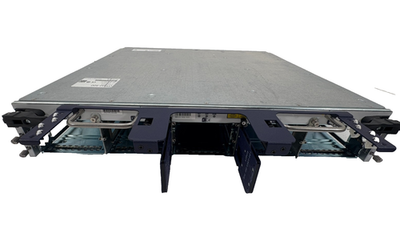
Optical Transport Multiplexer is the starting and ending point of optical signals. It is responsible for multiplexing different wavelengths of light into a single fiber or demultiplexing them.
- Deployment location: At both ends of the link.
- Essential: In WDM optical networks, it is required.
2. OADM (Optical Add-Drop Multiplexer)

Optical Add-Drop Multiplexer acts like a highway junction. It allows some wavelengths to be dropped (Add), while others can be added (Drop).
- Deployment location: Intermediate nodes, like branch points in metropolitan networks.
- Essential: Depends on the situation. Point-to-point transmission doesn’t need it, but ring networks do.
Note: OADM has evolved into ROADM (Reconfigurable OADM), where wavelength changes can be done remotely via software, eliminating the need for manual fiber manipulation.
3. OLA (Optical Line Amplifier)
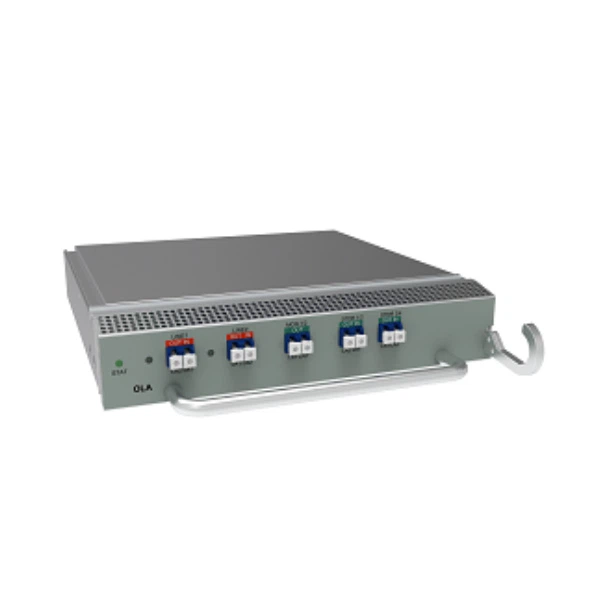
The Optical Line Amplifier can be thought of as a “booster” for the signal. Over long distances, signals weaken, and OLA amplifies them to maintain their strength.
- Deployment location: At intermediate stations along long-distance fibers.
- Essential: Not needed for short distances, but necessary for long distances (e.g., city-to-city).
4. REG (Regenerator)
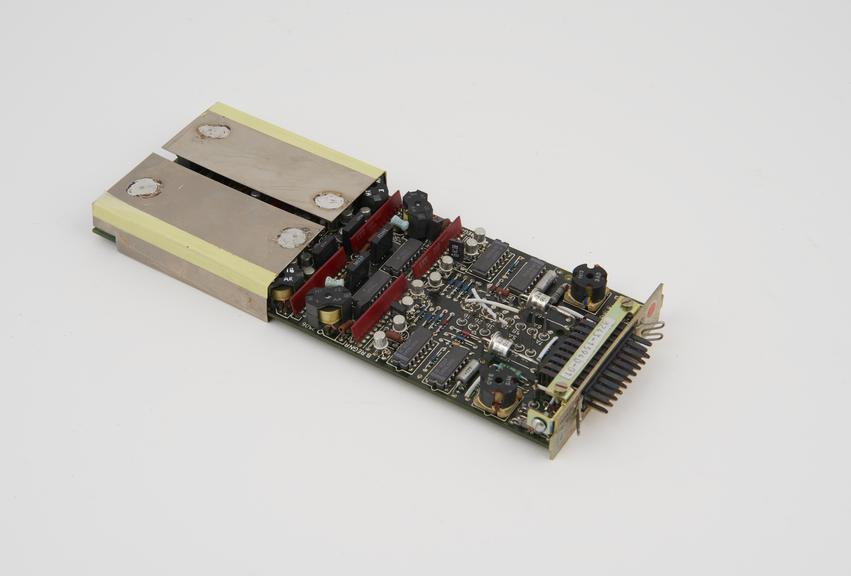
A Regenerator is used to adjust the signal, not just amplify it but also remove noise and restore signal quality.
- Deployment location: For ultra-long-distance transmission.
- Essential: Rarely used today, except in extreme long distances. Usually, OLA suffices, or Coherent Optical Communication is used as an alternative.
Besides the four mentioned above, there are several other key roles.
5. OTU (Optical Transport Unit)
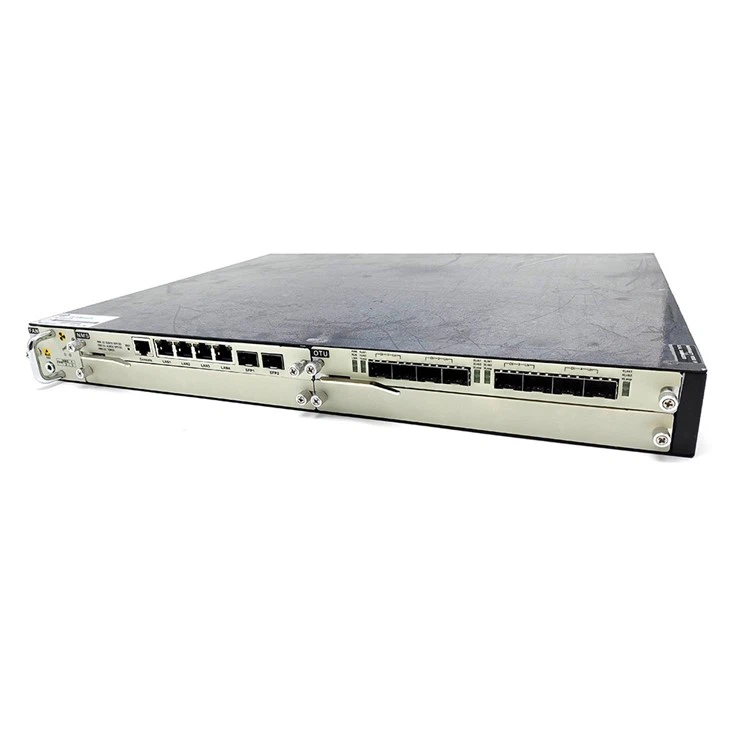
A wavelength converter changes non-standard wavelength light signals into the standard wavelengths required by the WDM system (ITU-T). This prevents wavelength conflicts.
- Deployment location: At the service access end, before the WDM system (in front of OTM).
- Essential: Highly necessary. Unless your router has expensive optical modules, this device is needed to connect to the system.
6. OXC (Optical Cross-Connect)
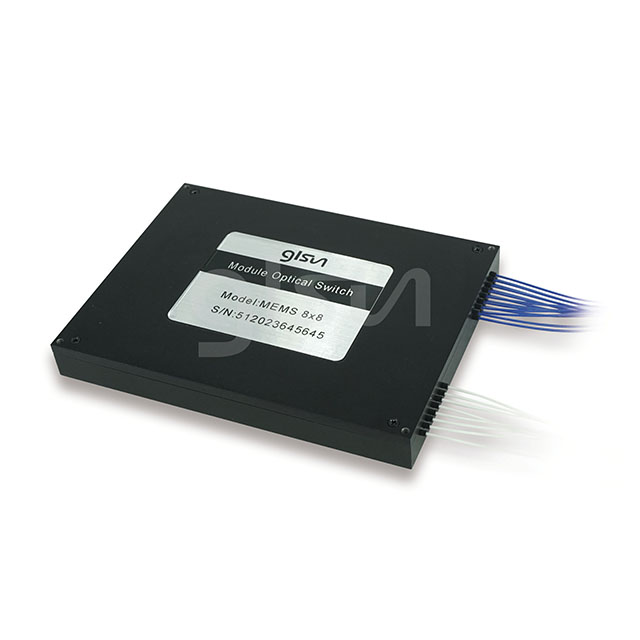
At the physical layer, it changes the transmission path of light signals. It is the core component for implementing Optical Cross-Connection (OXC), determining which path the light takes.
- Deployment location: Core hub nodes and cross-connection points.
- Essential: Depends on the scale. Simple point-to-point setups don’t need it, but complex mesh networks require it as a core component for flexible scheduling.
7. OLP (Optical Line Protection)
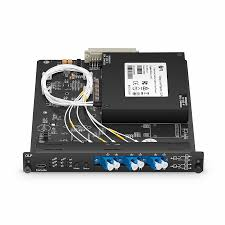
It monitors both primary and backup paths in real-time. Once it detects that the primary path is down (e.g., fiber cut), it switches the signal to the backup fiber within 50 milliseconds.
- Deployment location: At the line-side exit, at critical service start/end points.
- Essential: Depends on the importance of service. Must-have for critical services like banking or government networks, but may be omitted for regular broadband services to reduce costs.
In addition, in a practical scenario, after the optical signal travels from Site A to Site B, how do we determine if the signal is usable? The core metric to consider is Optical Power Budget, which ensures that after passing through OLA, OADM, and other critical components, the signal at Site B can still be properly recognized. The system works only when the total loss is ≤ the optical power budget.
Typical Scenarios in WDM Optical Networks
Are these components working simultaneously? The answer is no. It depends on the length of the link, the complexity of the network, and the cost considerations. Let’s look at two typical scenarios:
Scenario 1: Direct Link Between Two Data Centers (<80km) For a direct link between two data centers with a physical distance of less than 80km:
- Fiber installation location: ODF rack at the top of the cabinet.
- Equipment: Place OTM at both ends for multiplexing and demultiplexing, with a Transponder / OTU before the OTM.
- Intermediate equipment: No need for OLA, REG, or OADM.
- Connection type: Direct fiber connection. In this scenario, only the Transponder / OTU and OTM are used for wavelength conversion and multiplexing. No need for OLA, OADM, or REG.
Scenario 2: Provincial Backbone Network (>1000km) For a long-distance backbone network between two data centers, with a physical distance of more than 1000km:
- Endpoints: Must include OTM with a Transponder / OTU before it.
- Along the way: Every 80 km, an intermediate station with an OLA to amplify the signal.
- Node: In major cities, install an OADM for service drop.
- Optical Switch / OXC: Changes the transmission path of light signals.
- Protection: Use OLP for primary and backup link maintenance.
- Extreme case: If the signal deteriorates after long-distance transmission, add a REG for signal regeneration.
Thus, the components like OTM, OADM, OLA, REG, Transponder/OTU, Optical Switch/OXC, and OLP are not all needed simultaneously. They are selected based on the network’s design, link length, and signal loss calculations.
Comparison Summary
Finally, we clarify the seven types of devices in the table below.
| Component Name | Abbreviation | Add/Drop (Business) | OEO (Optical-Electrical-Optical) | Regeneration | Core Functions | Typical Deployment Location | Necessity |
| Optical Transport Module | OTM | Yes (All) | No | No | Wavelength multiplexing (Mux) and demultiplexing (Demux) | Link endpoints | Essential (System’s Foundation) |
| Optical Add-Drop Multiplexer | OADM | Yes (Partial) | No | No | Specific wavelength add/drop, others pass through | Intermediate nodes/Branch points | Essential for ring/mesh networks |
| Optical Line Amplifier | OLA | No | No | Yes (1R amplification) | Pure optical amplification to compensate for power loss | Every 80-100 km | Essential for long-distance transmission |
| Regenerator | REG | No | Yes | Yes (3R full recovery) | 3R regeneration (electrical processing), completely eliminates noise | Ultra-long distances/Signal distortion points | Rare, specialized scenarios |
| Optical Transponder Unit | OTU | No | Yes | Yes (3R on access side) | Converts non-standard wavelength to standard wavelength | Service access side (before OTM) | Essential for heterogeneous device access |
| Optical Cross-Connect | OXC | No | No | No | Alters the physical transmission path of light (Switching) | Core hubs/Scheduling nodes | Required for complex network scheduling |
| Optical Line Protection Switch | OLP | No | No | No | Automatic millisecond-level switching between primary and backup lines | Line side/Key exits | Essential for high-reliability services |
Note: 1R:Re-amplification ;2R:Re-amplification + Re-shaping ;3R:Re-amplification + Re-shaping + Re-timing
In actual wiring, the optical fiber is connected to the Line port on these devices, which face the line side.
In carrier or large campus networks, WDM optical networks are typically combined with PON networks:
- The WDM optical network, using components like OTM, OLA, OADM (and also OXC, OLP, etc.), moves data across metropolitan and backbone networks, transporting it from one data center/central office to aggregation/edge nodes in different cities or provinces.
- At these edge nodes, optimized GPON/XGS-PON OLT sticks or standalone OLT devices connect to passive optical splitters (splitters), distributing the bandwidth to numerous ONU/ONT units, and ultimately providing internet access to households or businesses, thus achieving “last mile” connectivity.
WDM optical networks are responsible for high-capacity, long-distance transmission over limited fiber resources, while PON handles multi-user access and bandwidth distribution. Together, they form a complete end-to-end optical access and transmission solution. I hope this content helps you fully understand WDM optical networks and PON networks.

Contact US !
- To request a proposal, send an E-Mail to bd@cloudswit.ch
- To receive timely and relevant information from Asterfusion, sign up at AsterNOS Community Portal
- To submit a case, visit Support Portal
- To find user manuals for a specific command or scenario, access AsterNOS Documentation
- To find a product or product family, visit Asterfusion-cloudswit.ch


