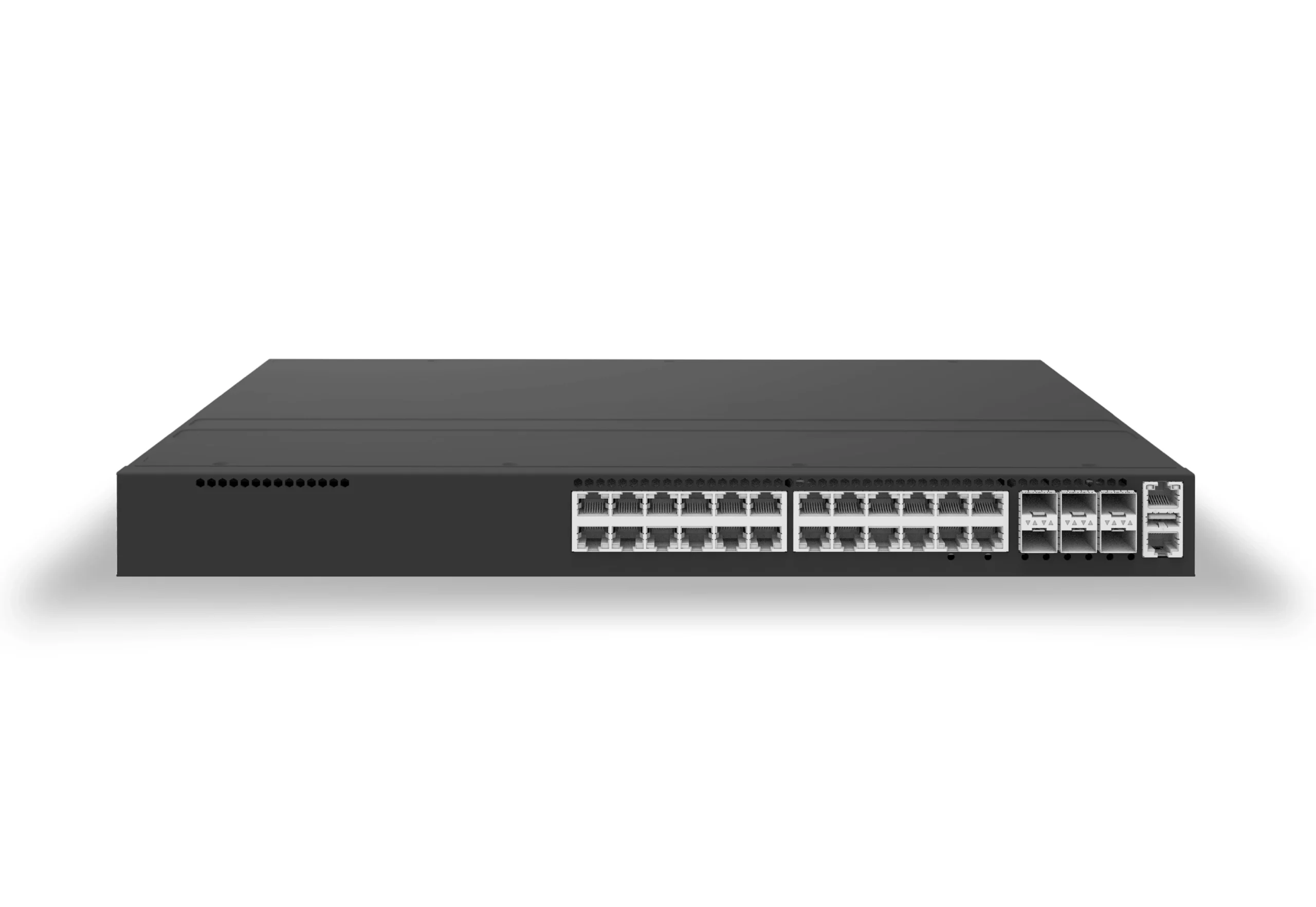
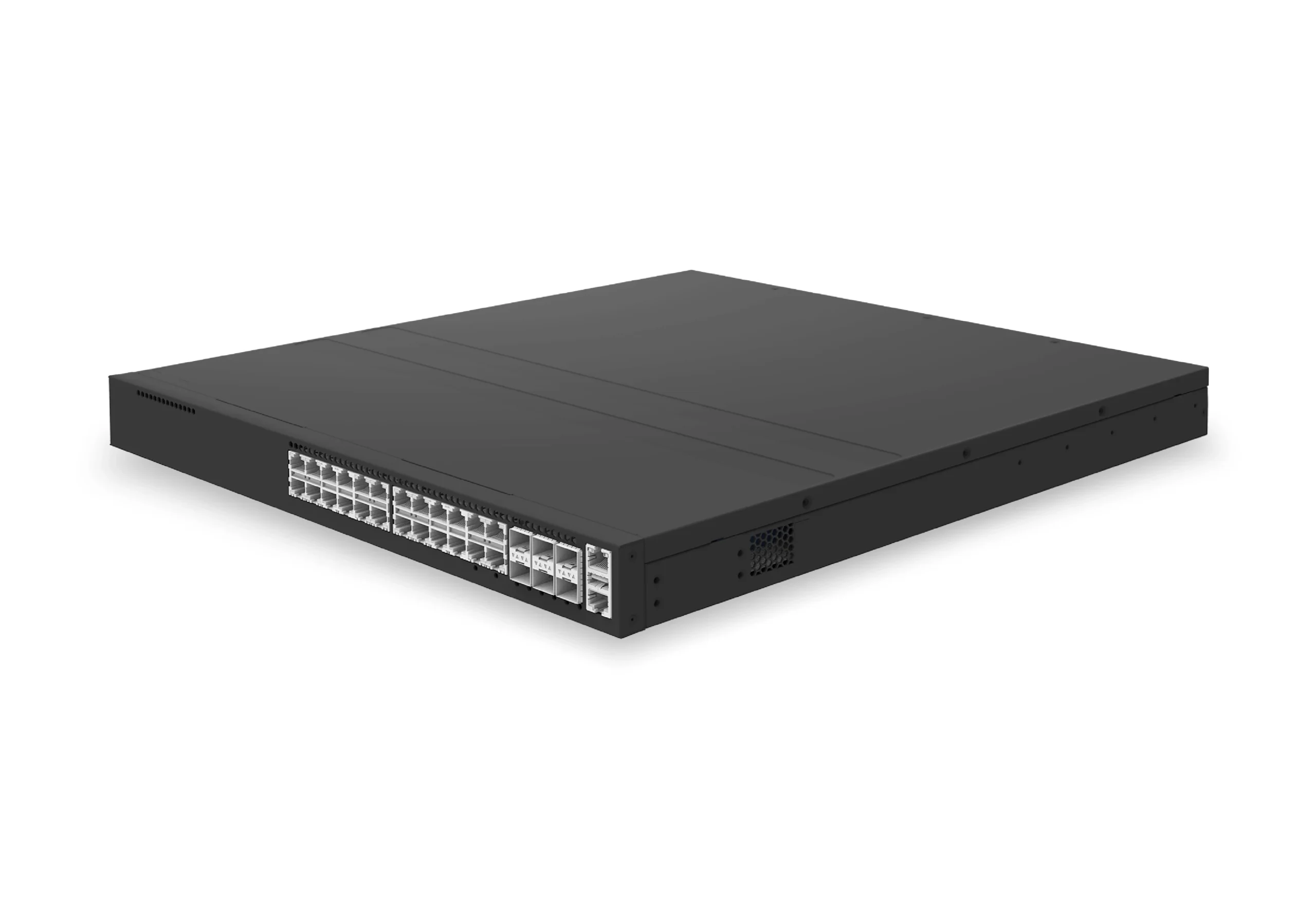
CX206Y-24MT-M-H

24×2.5G RJ45 L2/3 Access Switch, 6x25Gb/10Gb SFP28 Uplinks, Enterprise SONiC Ready, MLAG VXLAN Support

25G Uplinks

PoE Support

Enterprise SONiC

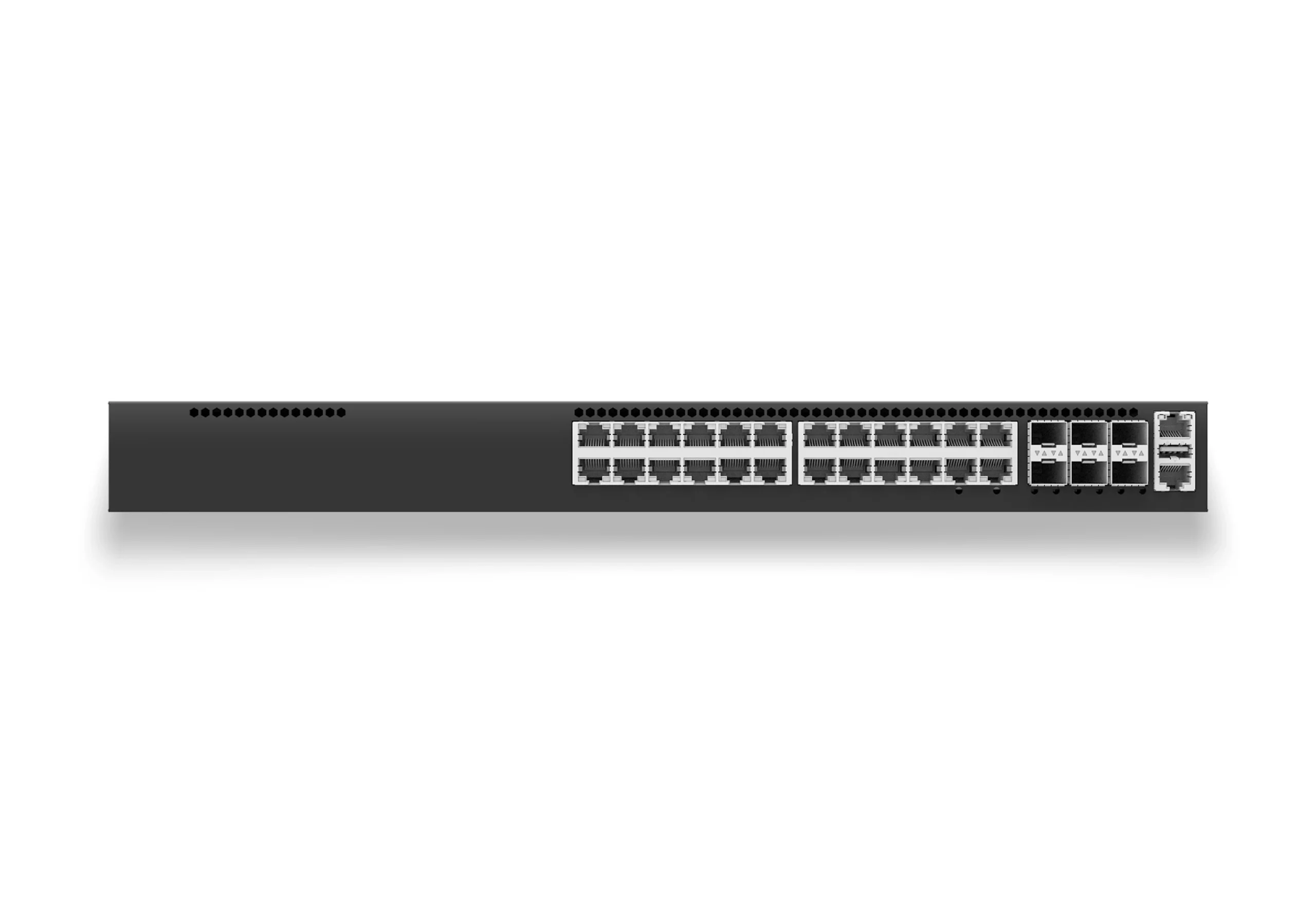
  • 24 Ports 2.5G RJ45 with 25G/10G uplinks
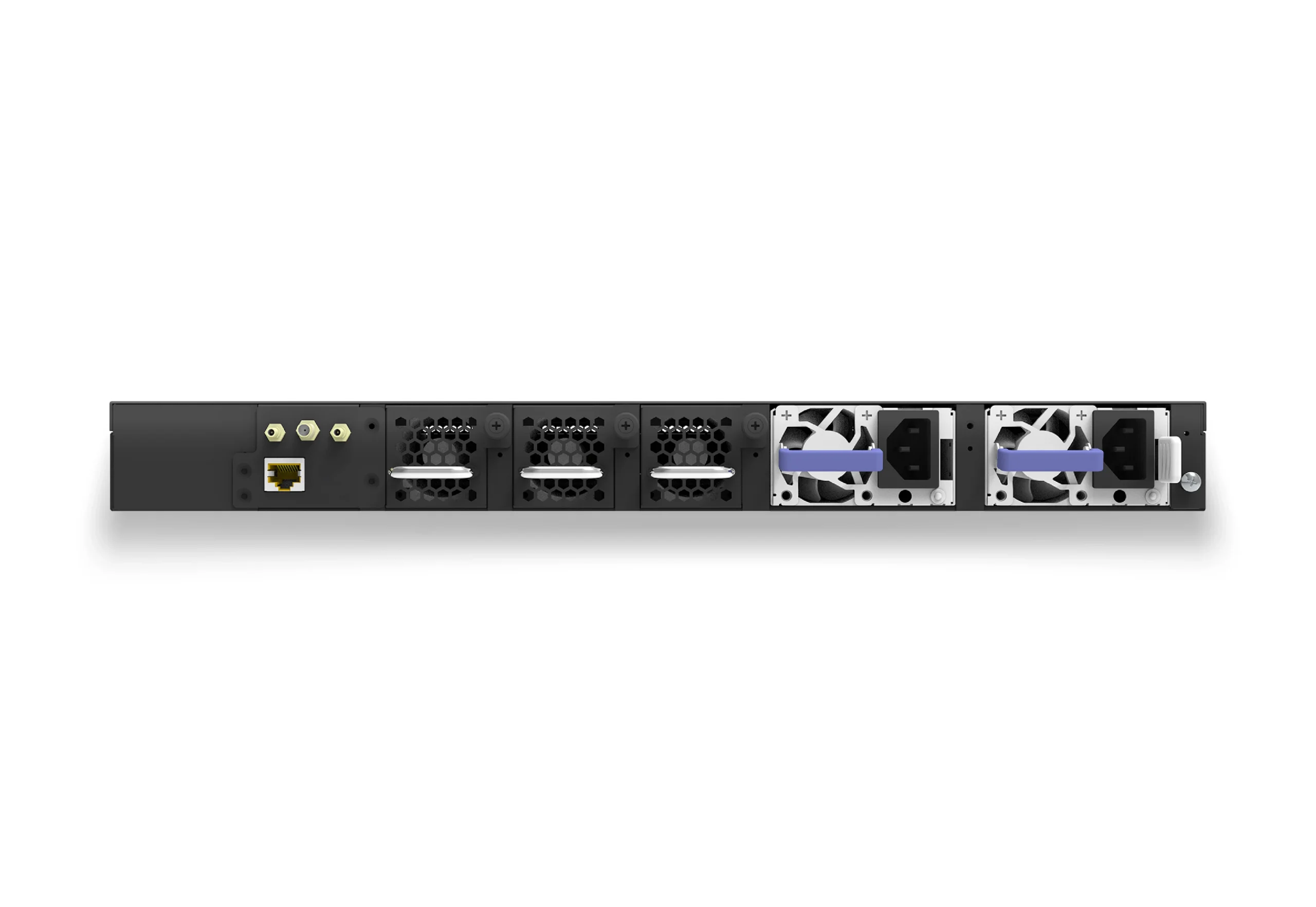
  • Optional PTP & GNSS Module
  • Rich Layer 2/3 features
  • Preloaded Enterprise SONiC Eliminates Costly Legacy Vendor Lock-In
  • Multi-Gig 2.5G Ports Optimized for Wi-Fi 7 APs
  • Zero Re-wiring Required when upgrading from 1G to 2.5G
Please login to request a quote

24-Port 2.5G RJ45 Ethernet Layer2/3 Access Switch with 6x25Gb/10Gb SFP28 Uplinks, Enterprise SONiC Ready, Marvell AlleyCat 5X

The CX206Y-24MT-M-H is a 24-port 2.5G Multi-Gigabit L3 campus switch equipped with 24×2.5G BASE-T and 6x25G/10G SFP28 uplinks, delivering a 210Gbps non-blocking capacity. Tailored for next-gen Wi-Fi 7 AP backhaul, NAS storage, and high-performance workstations, it allows full Cat5e infrastructure reuse with “Zero Re-wiring Required,” saving massive cabling costs.
As the market pioneer preloading Enterprise SONiC into campus access layers, it supports advanced L2/L3 features, including OSPF, BGP, VXLAN, BGP-EVPN, and MLAG. Seamlessly integrating into a 3-5 SKU leaf-spine fabric, it effortlessly scales from SMBs to massive multi-floor enterprise networks. Overall, this switch provides the ultimate cost-effective, bandwidth-multiplier solution for future-ready enterprise edge environments.

Specifications

Ports24 x 2.5G RJ45, 6 x 25G/10G SFP28Switch ASICMarvell AlleyCat5X
Switching Capacity210GbpsMac Address Entries32K
Forwarding Rate510MppsIPv4 Prefix Routes32K
RAM4GBIPv6 Prefix Routes16K
Flash Memory32GB eMMCARP Entries32K
Max. Power Consumption70W (Without PoE) Input Range100-240V AC / 36-72V DC
Packet Buffer3MBPower Module1+1 Hot-pluggable
Rack Space1RUFan Modules2+1 Hot-pluggable
Dimensions (HxWxD)44 x 440 x 470mmAirflowFront to Rear
Weight8.3KGOperating Temperature0 – 45℃ (32 – 113℉)
Optional
PoE740WPTP Class C Accuray
GNSS1PPS/ToD/10MHz Timing I/O

Optimized Software for Advanced Workloads-AsterNOS

AsterNOS is the pre-installed network operating system on Asterfusion’s CX-M Series campus switches. Built on SONiC, but enhanced far beyond the open-source version, AsterNOS delivers a rich set of enterprise-grade features tailored for modern campus and enterprise office environments. It supports comprehensive Layer 2 and Layer 3 protocols, advanced routing, and virtualization capabilities such as VXLAN and BGP-EVPN—along with powerful extensions like MPLS and MacSec for more specialized use cases. Smart, secure, and simple to manage, AsterNOS is purpose-built to power high-performance, always-on campus networks with ease and confidence.

Optimized Software for Advanced Workloads – AsterNOS

AsterNOS is the pre-installed network operating system on Asterfusion’s CX-M Series campus switches. Built on SONiC, but enhanced far beyond the open-source version, AsterNOS delivers a rich set of enterprise-grade features tailored for modern campus and enterprise office environments. It supports comprehensive Layer 2 and Layer 3 protocols, advanced routing, and virtualization capabilities such as VXLAN and BGP-EVPN—along with powerful extensions like MPLS and MacSec for more specialized use cases. Smart, secure, and simple to manage, AsterNOS is purpose-built to power high-performance, always-on campus networks with ease and confidence.

Software Features

layer-2-features-icon

Virtualization Features

  • VXLAN Centralized/Distributed Gateway
  • EVPN Type 2/3/5

    Quality of Service (QoS)

  • 8 Queues per Port
  • 802.1p Based Classification
  • DSCP Based Classification
  • Strict priority queueing
  • DWRR Scheduling
  • Policing/Shaping
  • Rate Limiting

layer-3-features-icon

Layer 3 Features

  • IPv4/v6 Dual Stack
  • Policy Based Routing
  • Resilient ECMP
  • ARP-to-Host
  • VRF
  • Bi-Directional Forwarding Detection (BFD)
  • IGMP v2/v3
  • Route Map
  • VRRP
  • GRE
  • Routing Protocols: OSPF v2/v3, BGP, MP-BGP

security-features-icon

Management and Monitoring

  • Asteria Campus Controller
  • Industry Standard CLI
  • Zero Touch Provisioning (ZTP)
  • SNMP v1/v2/v3
  • sFlow
  • Port Mirroring
  • Syslog
  • Log Management
  • PTP IEEE 1588v2 (TC and BC)
  • Containerized Custom Tools
  • BGP/BFD Operational Status

Quality Certifications

ISO-9001-SGS
ISO-14001-SGS
ISO-45001-SGS
ISO-IEC-27001-SGS
fcc-icon
ce-icon

Features

Advanced Routing Capabilities

Equipped with powerful routing capabilities, including static routing, VRF, OSPFv2/v3, BGP, and MP-BGP, this model ensures flexible network segmentation and dynamic route management for demanding enterprise and campus environments.
ai-ml-hpc

Comprehensive Virtualization Feature Set

This model supports full network virtualization features:
GRE/static GRE tunnels for point-to-point overlays, plus VXLAN with BGP-EVPN for scalable L2/L3 virtualization across distributed environments.
Perfect for flexible, multi-tenant campus/enterprise networks.
ai-ml-hpc

Advanced Network Protection Features

This model provides strong L2/L3 security for network edge and core, including storm control, DHCPv4/v6 Snooping, ND Snooping, RA Guard, and SAVI (source IP validation). It adds DAI, IP Source Guard (IPv4/IPv6), and CoPP to block spoofing, man-in-the-middle attacks, and control plane overload—ensuring a secure, resilient network.attacks, and control plane overload—ensuring a secure and resilient network environment.
ai-ml-hpc
BFD-Based Link Fault Detection & Re-routing in Sub-50ms

BFD-based link fault detection and sub-50ms re-routing capabilities ensure rapid, reliable failover across critical routing protocols including OSPF, BGP, and IS-IS, minimizing network downtime and maintaining uninterrupted traffic flow even during unexpected link failures.

Achieve seamless redundancy and active-active reliability with MC-LAG support.

MC-LAG support enables networks to maintain uninterrupted connectivity through seamless redundancy and active-active reliability,
ensuring zero downtime and optimal performance during link or device failures.

ai-ml-hpc

Harness MPLS Capabilities for Seamless Redundancy and Resilient Path Engineering

This switch model supports robust MPLS functionality, enabling efficient label-switched path management and seamless traffic forwarding across complex networks. It delivers active-active-like reliability through MPLS-based redundancy mechanisms, ensuring uninterrupted connectivity for mission-critical applications.

ai-ml-hpc

24-Port 2.5G Multi-Gig Switch Support PTP (Optional)

IEEE 1588v2 PTP timing diagram for data center switches with sub-microsecond precision
CX206Y-24MT-M-H layer 2 and layer 3 access switches fully support IEEE 1588 PTPv2 and SMPTE 2059-2 standards through hardware and software. The hardware port supports PTP as a Boundary Clock (BC) or Transparent Clock (TC), with customizable modules to fit customer needs. On the software side, Asterfusion leads the way in implementing and optimizing PTP in SONiC, delivering top performance on our AsterNOS Enterprise Distribution. Currently, it supports PTP Class C with a maximum time error of ≤10 ns. →For More←

Unified Visualization, Management & O&M with OpenWiFi Network Controller

Our campus switches, powered by enterprise SONiC, integrate with a TIP OpenWiFi – based controller. This integration enables unified monitoring, automated deployment, and streamlined operations.
Key features include intelligent topology planning, ZTP, real – time network visualization, and script – based automation. With centralized remote management and flexible deployment options (cloud or on – premise), this solution offers full control over the entire campus network, from APs to switches. It helps IT teams optimize performance, speed up troubleshooting, and scale easily. For more←
the-software-architecture-of-the-sonic-based-packet-broker
Our campus switches, powered by enterprise SONiC, integrate with a TIP OpenWiFi – based controller. This integration enables unified monitoring, automated deployment, and streamlined operations.
Key features include intelligent topology planning, ZTP, real – time network visualization, and script – based automation. With centralized remote management and flexible deployment options (cloud or on – premise), this solution offers full control over the entire campus network, from APs to switches. It helps IT teams optimize performance, speed up troubleshooting, and scale easily. For more←

Network Packet Broker Functionality (Optional)

the-software-architecture-of-the-sonic-based-packet-broker

The SONiC-based campus switches CX-M series take full advantage of SONiC’s open and containerized architecture, and fully leverage its capabilities by installing the new PB-APP container and deploying packet broker docker functionality on SONiC.

This integration unlocks a range of advanced features, including traffic mirroring, raw data tagging, filtering, aggregation, preprocessing, load balancing, and output replication. For more←

Panel

Front Panel Port Indicator Image for 24-port 2.5G access switch CX206Y-24MT-M-H
Rear Panel Port Indicator Image for 24-port 2.5G access switch CX206Y-24MT-M-H

Warranty

This model is backed by a 2 year limited hardware warranty.
Multiple extended support options, including advanced replacement and 24×7 support services, are available.
Contact us for complete details.

Warranty

This model is backed by a 2 year limited hardware warranty.
Multiple extended support options, including advanced replacement and 24×7 support services, are available.
Contact us for complete details.

Enterprise Access Switches Comparison

CX204P-4Y48MT-M-H
CX206Y-24GT-M-H
CX206Y-24MT-M-H
Uplink Ports
4 x 100G/40G QSFP28 <br> 4 × 25GE/10GE SFP28
6 × 25GE/10GE SFP28
6 × 25GE/10GE SFP28
6 × 25GE/10GE SFP28
6 × 25GE/10GE SFP28
RJ45 Ports
48x 2.5G BASE-T
48 x 1G BASE-T
48 x 2.5G BASE-T
24 x 1 G BASE-T
24x 2.5G BASE-T
Management Layer
L3+
L3+
L3+
L3+
L3+
Power Supply
1+1 Hot-pluggable
1+1 Hot-pluggable
1+1 Hot-pluggable
1+1 Hot-pluggable
1+1 Hot-pluggable
Fan
2+1 Hot-pluggable
2+1 Hot-pluggable
2+1 Hot-pluggable
2+1 Hot-pluggable
2+1 Hot-pluggable
Airflow
Front-to-rear
Front-to-rear
Front-to-rear
Front-to-rear
Front-to-rear
Optional PoE Budget
740W/1440W
740W/1440W
740W/1440W
740W
740W
PTP
Optional
Optional
Optional
Optional
Optional
PTP Level
Class C
Class C
Class C
Class C
Class C
GNSS
Optional
Optional
Optional
Optional
Optional
OSPF, BGP, VXLAN, BGP-EVPN, MLAG, IPV6, QoS, MPLS
Yes
Yes
Yes
Yes
Yes

FAQ

Q1: Is 2.5G speed suitable for the access layer?

Yes. 2.5G Multi-Gigabit ports are ideal for high-bandwidth edge devices like Wi-Fi 7/6E APs, high-performance workstations, compact NAS storage, and conference terminals. It easily removes the 1G bandwidth bottleneck at the network edge. However, for core networks or servers with higher data needs, 10G or faster links are still recommended.

Q2: Should enterprises directly choose 10G for access switches?

It depends on your budget and building conditions. 10G Base-T is great for brand-new buildings or very high-bandwidth environments. However, 2.5G offers a much better balance of cost and performance for existing networks. It serves as a cost-effective bridge, allowing you to give 2.5G speed to heavy-traffic devices (like Wi-Fi 7 APs) while keeping low-bandwidth devices (like IP phones) on 1G ports.

Q3: Do enterprise Wi-Fi APs really need 2.5G links?

It depends on the AP specs and user density. Standard Wi-Fi devices rarely go over 1Gbps in real-world use, so a 1G uplink is fine for them. However, next-gen Wi-Fi 7 APs handle much higher traffic. Under heavy multi-user use, a 1G uplink will clog. A 2.5G switch provides the needed bandwidth room to keep your wireless network running at full speed.

Q4: Can I mix 1G and 2.5G devices on a 2.5G switch?

Yes. Enterprise 2.5G switches (like the CX206Y series) have auto-negotiation ports. They automatically work with older 1G or 100M devices. Mixing different speeds on the same switch is very common, so you do not need to upgrade all your office computers to 2.5G at the same time.

Q5: From a TCO standpoint, why is 2.5G more cost-effective than 10G Base-T?

The main saving is avoiding expensive recabling. 10G Base-T requires a 500MHz frequency. Older Cat5e or standard Cat6 cables cannot handle this speed reliably, leading to packet loss and slow downs. To run 10G over copper, you must rip out old wires and install thick, expensive Cat6A shielded cables. In the US and Europe, the labor cost for rewiring is often 3 to 5 times the price of the switch itself. In contrast, 2.5G allows “Zero Re-wiring Required” because it can run up to 100 meters on your existing Cat5e cables, fully protecting your current infrastructure investment.

Q6: What security features are important for access switches in campus networks?

Access switches connect directly to unpredictable user environments. In university dorms or corporate offices, network admins often face IP conflicts from rogue routers, ARP spoofing, and DHCP flood attacks that can crash servers.
To keep the network clean, access switches need hardware-level protection. For example, the CX206Y-24MT-M-H supports Dynamic ARP Inspection (DAI), IP Source Guard, DHCP Snooping, and Control Plane Protection (CoPP). These features block malicious traffic at the edge before it can spread to your core network.