Table of Contents
Introduction
To get straight to the point, SONiC VPP is formed by the technical integration of SONiC (Software for Open Networking in the Cloud) and VPP (Vector Packet Processing).
SONiC was originally developed by Microsoft. Now managed by the Linux Foundation, it has become the de facto standard for open-source network operating systems (NOS). It provides network devices with a mature control plane and comprehensive Layer 3 (L3) routing capabilities.

Based on this, Asterfusion has developed its own enterprise-grade SONiC variant—AsterNOS. It is designed to meet more complex network requirements in data centers, enterprise campuses, and high-performance computing environments.
VPP , originally developed by Cisco, is a high-performance user-space data plane. It is now part of FD.io, the Fast Data project under the Linux Foundation. VPP’s core goal is to deliver high-throughput packet processing capabilities on commercial off-the-shelf (COTS) general-purpose processors.

When the SONiC control plane is combined with the VPP data plane, a fully software-defined network device architecture is created. It inherits the maturity and functionality of SONiC, while also having the wire-speed forwarding capability of VPP. It enables high-performance routing and security functions without relying on dedicated hardware.
Building on this, in 2025, Asterfusion launched the enterprise-grade SONiC-VPP for router platforms—known as AsterNOS-VPP.
This article compares the community version of SONiC VPP with the enterprise version AsterNOS-VPP to help enterprises select the most suitable solution.
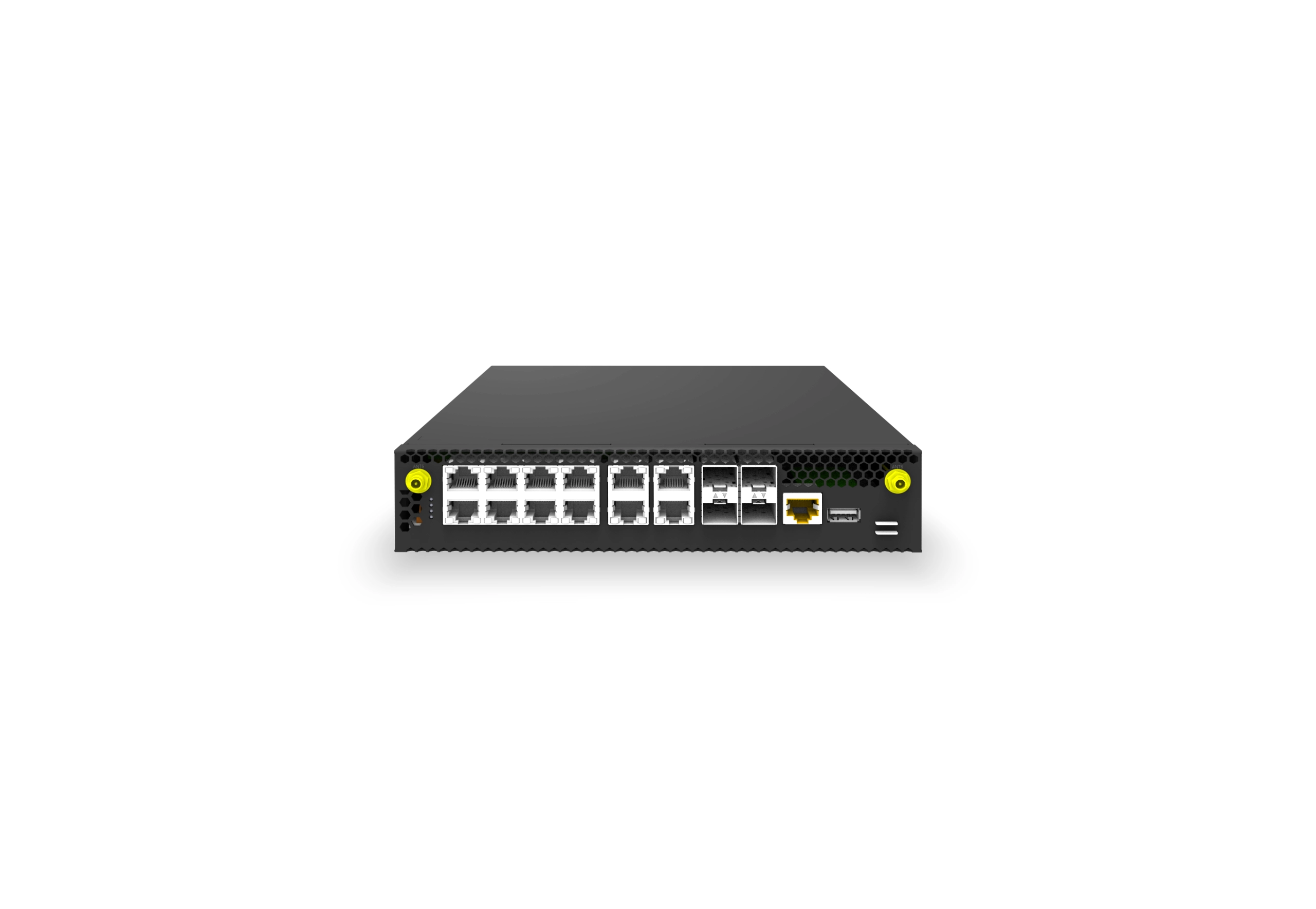
Regarding AsterNOS-APP, let’s first take a look at Enterprise SONiC Routing OS AsterNOS-VPP Reliable Overview
Next, we will explain the differences between the two from several aspects, and provide recommendations at the end.
Ⅰ. Architecture and Platform Support
The community SONiC-VPP is a combination of the open-source SONiC and VPP projects.
According to data on GitHub, it currently supports platforms based on Marvell Prestera and Teralynx, as well as Broadcom Helix 5 and Trident chipsets
The enterprise version AsterNOS-VPP expands and optimizes on this foundation:
- Supports both ARM and x86 architectures. When combined with Marvell OCTEON CN102/CN103 DPUs, it enables hardware-accelerated high-performance forwarding.
- Delivers highly programmable integration of the control plane and data plane. It supports software-defined Layer 2/Layer 3 (L2/L3) functions, routers, firewalls, and NetFlow traffic analysis.
Ⅱ. Automation and Monitoring Capabilities
The community version of SONiC VPP has relatively limited monitoring and automation features. It relies more on users to develop custom solutions or integrate third-party tools.
The enterprise-grade AsterNOS-VPP has made significant optimizations to automation and monitoring:
- Automation: Supports NetDevOps, SSH Klish, RESTful API, uCentral, NetConf/YANG, and gNMI, enabling unified configuration and management of network devices.
- Monitoring: Supports NetFlow/IPFIX traffic sampling and analysis, Prometheus Exporter, SNMP, and SPAN/RSPAN/ERSPAN. It enables real-time monitoring of network health, traffic patterns, and performance metrics.
Ⅲ. Performance and Hardware Optimization
AsterNOS-VPP has undergone hardware optimizations, leveraging DPU acceleration to its full potential:
- Operates on Marvell OCTEON CN102/CN103 DPUs or x86 network cards with DPDK support, ensuring wire-speed processing capability.
- AsterNOS-VPP, hosted on DPUs, executes advanced functions such as routing, firewall, and NetFlow analysis
- Supports virtualized environments (KVM/VMware) and allows flexible deployment on physical or virtual network devices.
Ⅳ. Typical Deployment Scenarios
The community version of SONiC VPP has limited features and support. It is therefore more suitable for the following scenarios:
- Educational and laboratory environments
- Proof of Concept (PoC) testing
- Small-scale open-source projects and use by network enthusiasts
The enterprise version AsterNOS-VPP is developed and maintained by a company with regular updates. It is suitable for:
- Router and firewall deployment in large enterprises
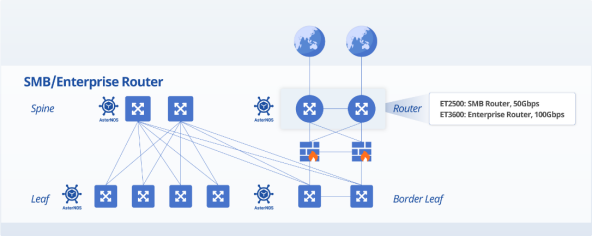
- SMB (Small and Medium-sized Business) and Enterprise Routers
Ⅴ. Core Function Comparison
The following compares selected items to help you better understand the differences between the two solutions:
| Feature Module | Community SONiC VPP | Enterprise AsterNOS-VPP | Remarks |
| Training & Support | Relies on open-source community forums for Q&A; no enterprise-grade support | Online support | The enterprise version provides full-lifecycle support, reducing O&M learning costs |
| Documentation & Insights | Basic documentation; no in-depth technical analysis or scenario-based deployment cases | Rich documentation (e.g., product manuals, scenario-based deployment guides) and expert support | The enterprise version’s documentation enables direct production environment deployment, reducing trial-and-error costs |
| Management & Automation | CLI, GitHub documentation | Klish CLI, RESTful API, gNMI, NetConf, unified management for Open WiFi Controllers | The enterprise version supports more diverse O&M tools |
| Monitoring Capability | Limited community tools | NetFlow/IPFIX, Prometheus Exporter, SNMP v1/v2/v3, SPAN/RSPAN/ERSPAN | The enterprise version enables global visualization and troubleshooting |
| High Availability | Manual configuration required for some functions | MC-LAG, VRRP, BFD, SLA Monitoring, Link Tracking | The enterprise version supports redundancy and business continuity |
| Deployment Complexity | High; requires familiarity with Linux/SONiC | Low; optimized system, technical support, and pre-configured devices provided | The enterprise version reduces O&M complexity |
| Cost | Open-source and free; self-maintenance required | Subscription-based; includes technical support | The enterprise version has controllable costs and rich value-added services |
| Version Updates | Open-source; no maintenance | Quarterly updates, with one major update annually | The enterprise version has predictable updates, ensuring feature iteration and system stability |
As shown in the table, the enterprise AsterNOS-VPP has far better management capabilities than the community SONiC VPP. The community version only supports basic CLI operations and GitHub docs for reference. The enterprise version, however, offers the more user-friendly Klish CLI, natively integrates automated interfaces (RESTful API, gNMI, NetConf), and even enables unified management of Open WiFi Controllers—easily meeting enterprises’ centralized management needs for multiple devices and scenarios.
For monitoring capabilities, the enterprise AsterNOS-VPP also has clear advantages. The community version only provides basic monitoring. The enterprise version, by contrast, uses tools like Prometheus Exporter to track network health, traffic patterns, and performance metrics in real time—giving enterprises a basis to troubleshoot faults and optimize traffic.
In terms of technical support response, the enterprise AsterNOS-VPP shows enterprise-grade strengths too. The community SONiC VPP has no official support, relying only on open-source forums for help. The enterprise version, though, offers exclusive online support covering the full lifecycle (deployment, operation, fault handling). It responds to enterprise needs promptly, cutting business interruption risks from network issues and easing O&M pressure.
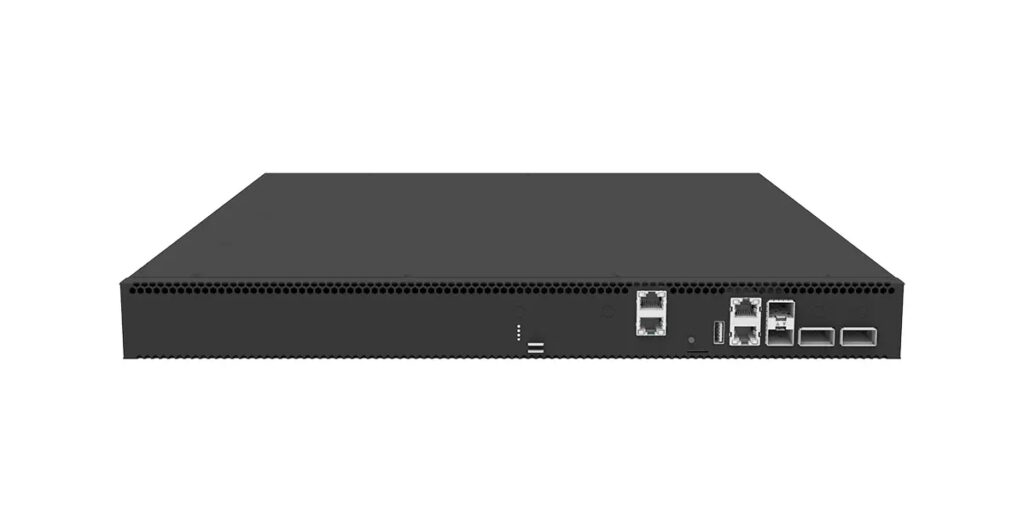
Asterfusion ET3608 powered by Marvell OCTEON 10 CN103
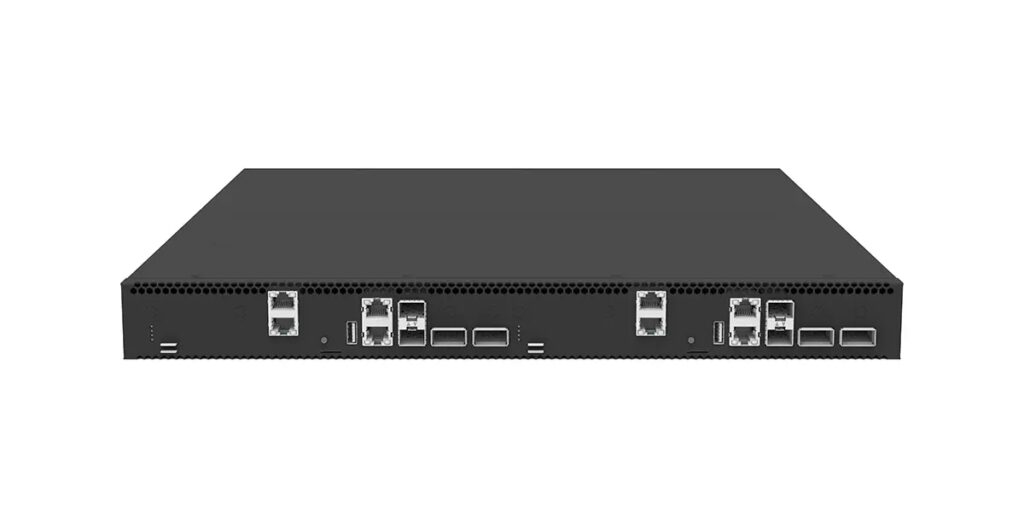
Asterfusion ET3616 powered by Marvell OCTEON 10 CN103
Ⅵ. Summary and Recommendations
The community version of SONiC VPP is suitable for technical exploration and lab environments. For enterprise production environments, its features and performance may be insufficient—especially in areas like large-scale routing, high-performance VPN, traffic visualization, and enterprise O&M.
Built on the community version, the enterprise AsterNOS-VPP has been fully enhanced. It offers enterprise-grade router functions, hardware acceleration, automated O&M, rich security features, and monitoring capabilities—suitable for scenarios like data centers, campus cores, AI computing, and high-density enterprise networks.
Enterprises can refer to the following principles when making a selection:
- If the primary use is for experiments, PoC, or small-scale networks, and cost is a concern, the community SONiC VPP is a viable choice.
- If stable, high-performance, and full-featured router deployment is required, the enterprise AsterNOS-VPP is recommended.
Grab your AsterNOS-VPP FREE TRIAL IMAGE here !

Contact US !
- To receive timely and relevant information from Asterfusion, sign up at AsterNOS Community Portal
- To submit a case, visit Support Portal.
- To find user manuals for a specific command or scenario, access AsterNOS Documentation
- To find a product or product family, visit Asterfusion-cloudswit.ch .
- To contact Sales, Send E-Mail to bd@cloudswit.ch


