Table of Contents
AI Data Center Energy Consumption Surges
By the end of 2025, new FERC regulations are expected to support the co-location of data centers and power generation facilities. This allows AI data centers to connect directly to power plants. The goal is to bring compute resources closer to power sources and reduce grid interconnection bottlenecks.
AEP Ohio has suspended all new data center interconnection requests due to insufficient power infrastructure. In The Dalles, Oregon, local communities have opposed Google’s expansion plans over concerns about water consumption. Communities in Georgia, Indiana, Missouri, and Washington have also pushed back against proposed AI infrastructure projects. They are calling on technology companies to fund new power generation and transmission upgrades themselves, rather than passing the costs on to local ratepayers.
The underlying driver is the explosive growth of AI demand. As power, water, and land resources become increasingly constrained, data centers face more stringent requirements:
- Support more AI compute capacity with limited power and water resources.
- Deliver higher density, lower latency, and better operational efficiency within a smaller footprint.
- Reduce downtime and operational changes, as every adjustment can lead to higher power costs.
Build a More Efficient AI Data Center with a Dual-Plane Architecture
How to make AI data centers more efficient, compact, and easier to operate within limited resources has become a key industry focus.
As AI clusters continue to scale, traditional data center architectures are reaching their limits in both flexibility and efficiency. Every increase in compute density drives a disproportionate increase in network complexity. Single-plane network designs often struggle to balance fault isolation, operational simplicity, and scalable expansion.
In practice, the network architecture often determines the actual utilization of AI compute resources. Power, space, and cooling capacity are finite. The challenge is no longer how to add more resources, but how to maximize compute output from every watt consumed.
This is the motivation behind the dual-plane network architecture.
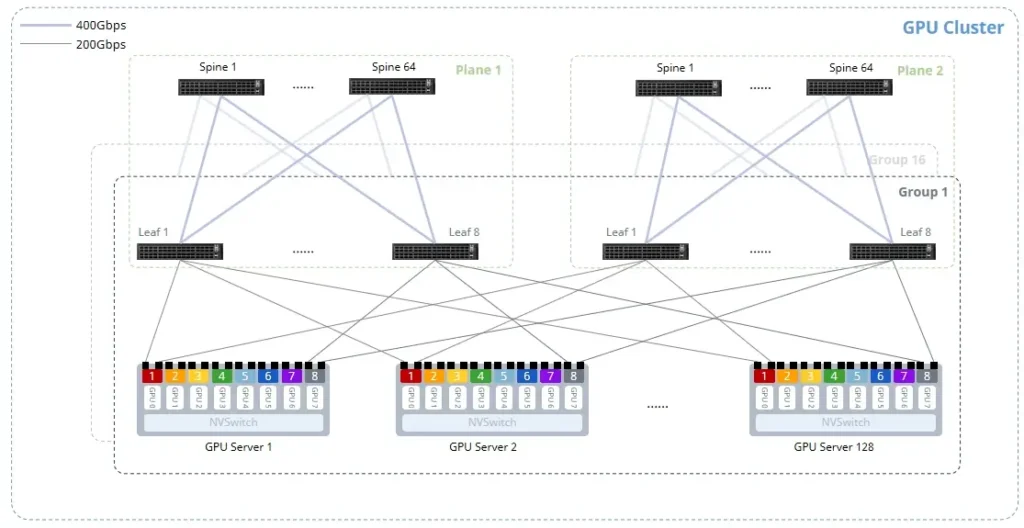
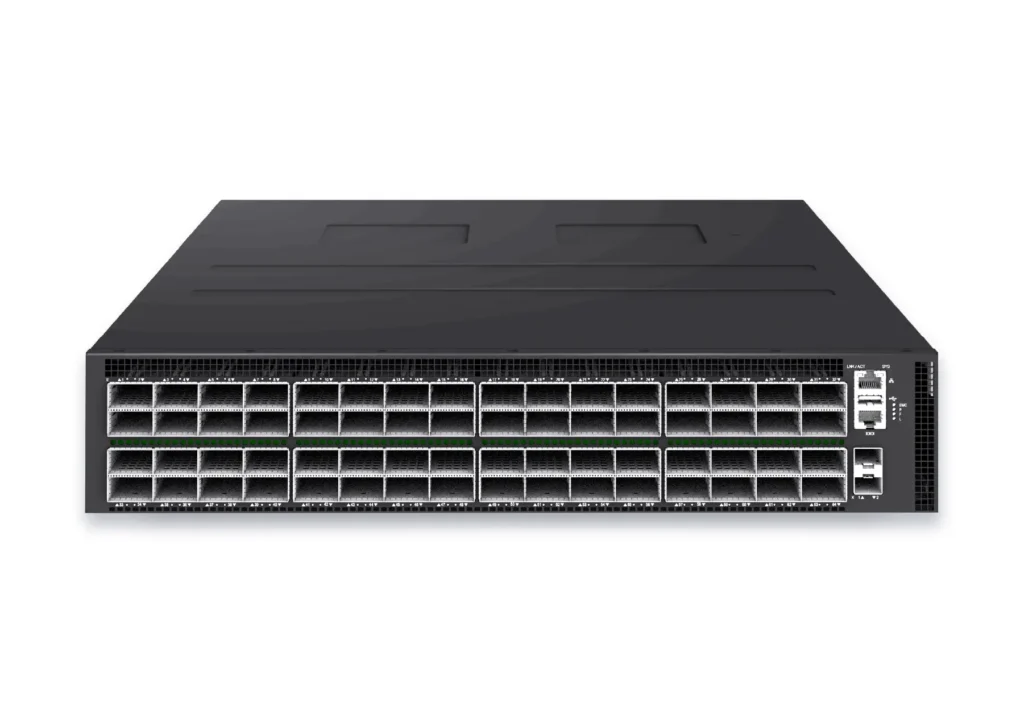
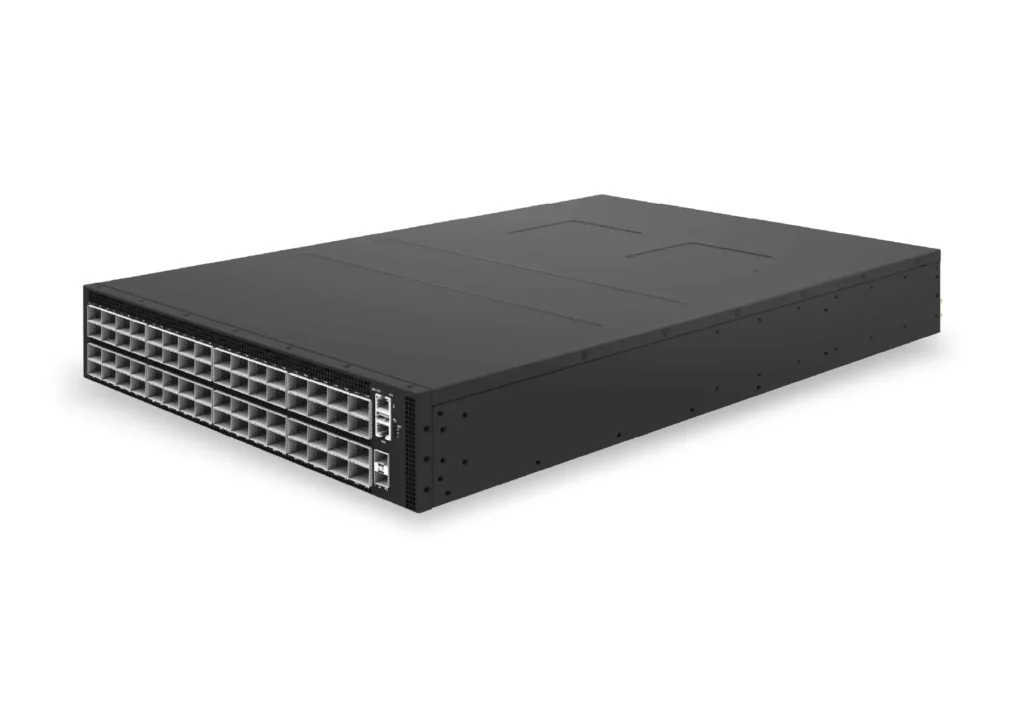
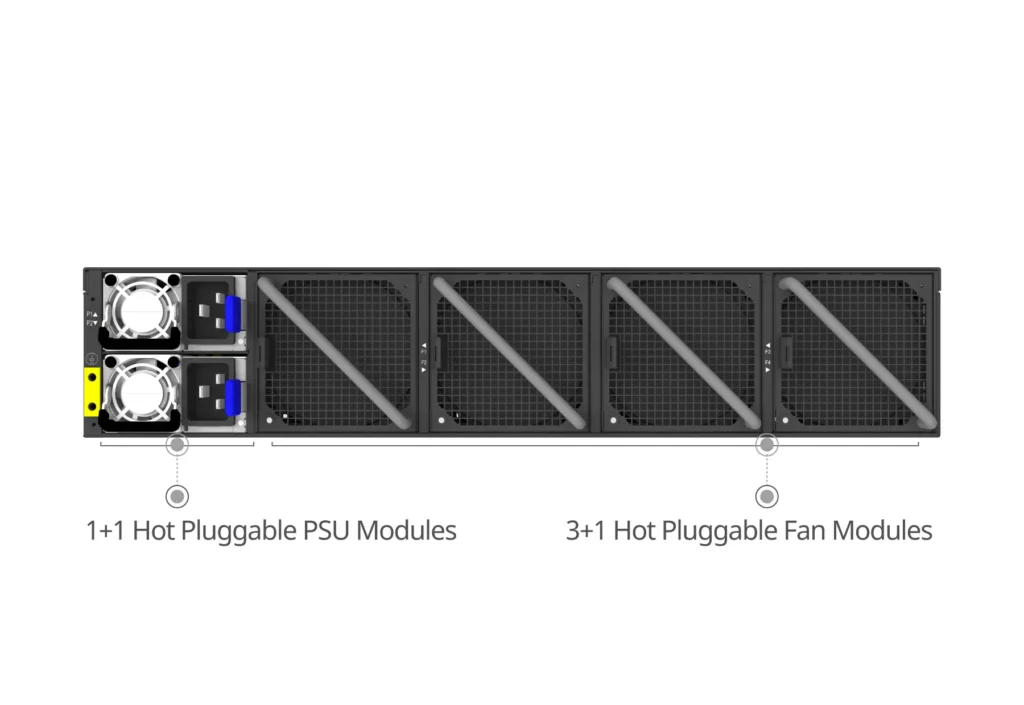
By dividing traffic within the same GPU or server cluster across two independent forwarding planes, each node deployed by AIDC switches can use dual NICs or dual uplinks connected to separate network planes. This design delivers several key advantages:
Learn about advanced AI Network technologies.
1. Higher availability and reduced downtime risk
AI training workloads depend on high throughput and low latency across the entire cluster. With a dual-plane architecture, traffic can continue to flow through one plane if congestion or failures occur in the other. This reduces service disruption and minimizes the operational risks associated with network failures. Improved availability directly contributes to higher overall compute utilization.
2. Support for compact and high-density deployments
A dual-plane design improves port utilization and topology symmetry through high-density switching platforms, dual-uplink connectivity, and carefully planned cross-plane cabling. This allows larger GPU clusters to be deployed within a limited footprint while reducing congestion and operational complexity.
3. Maintenance without service interruption
Operators can perform software upgrades, configuration changes, or localized maintenance on one network plane while production traffic continues to run on the other. This significantly reduces the impact of maintenance windows on running workloads. In AI data centers, where power costs and downtime costs continue to rise, this capability has become an important factor in improving operational efficiency.
How to Build a Dual-Plane Network for AI Compute Fabric
Refer to AI Computing Fabric Dual-Plane Network Architecture Design.

Compute-Power Coordination: Moving Workloads Where Resources Are Best Available
The value of a dual-plane architecture extends beyond network resiliency. It also plays an important role in compute-power coordination. As AI workloads are distributed across multiple data centers, a dual-plane design provides more stable connectivity, lower jitter, and a stronger foundation for hierarchical resource management.
1. Better support for coordinated scheduling of compute and power resources
Modern compute networks focus on interconnecting compute resources across data centers while enabling optimal routing and coordinated scheduling. A dual-plane architecture provides a more predictable and resilient transport layer for these operations, making it easier to align compute placement with power availability.
2. Easier workload migration based on resource conditions
When power capacity becomes constrained at one campus or renewable energy is more readily available at another site, workloads and traffic can be redirected accordingly. The dual-plane design helps reduce jitter and service interruption during migration, improving workload mobility across data centers.
3. Better suited for high-density AI training environments
Large-scale AI training workloads are highly sensitive to latency, jitter, and lossless connectivity. Compared with traditional large-scale Layer 2 or Layer 3 architectures built on a single network plane, a dual-plane design provides a more robust foundation for high-performance AI clusters.
A dual-plane network delivers stable connectivity between data centers, while compute-power coordination places workloads on the most suitable compute and energy resources. Together, they make traffic paths and failover behavior more predictable. This enables the scheduling layer to focus on its primary objective: placing workloads where they can run most efficiently and maximizing compute output per watt in power-constrained environments.
Breaking the Bottleneck Through Coordination Between Power Infrastructure and Operations
A dual-plane architecture can significantly improve compute efficiency by reducing GPU idle time, minimizing unnecessary traffic, and increasing overall resource utilization. However, addressing the rapid growth in AI data center power consumption requires more than network optimization alone. Both the power infrastructure and operational domains must work together.
Power Infrastructure: Supporting Growth with an Integrated Energy Framework
On the power side, the solution lies in an integrated generation-grid-load-storage approach.
Key components include:
- Grid-forming energy storage systems
- HVDC power distribution
- Coordinated deployment of solar, natural gas, and energy storage resources
- Campus-level energy buffering capabilities
These technologies help address several critical challenges, including limited grid interconnection capacity, fluctuating power demand, and renewable energy integration. Co-located power generation and peak-shaving strategies can further improve power availability and system stability.
Operations: Flattening Peak Demand Through Scheduling and Governance
On the operations side, the focus shifts to workload scheduling and resource governance.
Combined with network architectures such as dual-plane networking, operators can leverage compute scheduling, traffic engineering, workload orchestration, and peak-to-off-peak load shifting to smooth power demand curves. Critical workloads and power-intensive jobs can be scheduled at different times, reducing instantaneous pressure on the power infrastructure.
The principle is straightforward but important: not all workloads need to run at the same time, on the same network plane, or at the same power level. Effective coordination between infrastructure and operations allows available resources to be utilized more efficiently while reducing the impact of peak power demand.
Conclusion
The rapid growth in energy consumption is no longer a challenge confined to individual data centers. It has become a fundamental issue that the entire AI industry must address.
The power and efficiency challenges facing AI data centers will not be solved by any single technology. A dual-plane architecture helps improve how compute resources are utilized and how efficiently workloads are transported across the network, but it is only one part of the solution.
A lasting solution requires coordination across three domains: networking, power infrastructure, and operations. Network architectures must become more efficient, power delivery must become more resilient, and workloads must be scheduled more intelligently. Only through this combined approach can AI data centers continue to scale while improving compute output per watt.
Request a demo or need assistance ?
Fill out the form, and we’ll reach out to you today !


