Table of Contents
AI Factory is from Concept to Large-Scale Deployment
Germany’s first AI factory, HammerHAI, began operations in April 2025.
Armenia’s first AI factory in the South Caucasus was officially launched on June 1, 2026.
LG Group and NVIDIA are building AI factories based on the NVIDIA DSX platform. The AI factory provides accelerated computing infrastructure for LG Group. It supports training, simulation, validation, and deployment of AI applications across robotics, autonomous driving, data center technologies, and GPU cloud services.
NVIDIA and SK Group are building the largest AI factory in South Korea. The facility will host more than 50,000 NVIDIA GPUs. Phase 1 is expected to complete by the end of 2027. The two companies have also established a long-term partnership with SK hynix. The goal is to advance next-generation memory technologies such as HBM for global AI factory initiatives, and to accelerate semiconductor design and manufacturing.
A wide range of AI factories spanning manufacturing, industrial systems, and consumer electronics are being rapidly deployed across multiple countries and are moving into service.
What is AI Factory
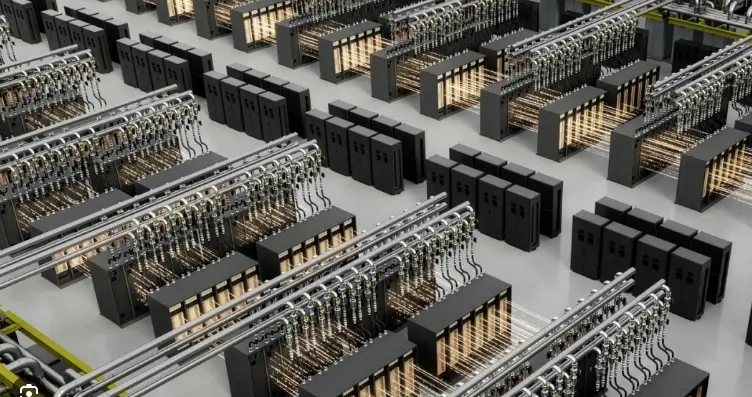
From concept to large-scale deployment, the “AI factory” is replacing traditional data centers and becoming the core engine of digital transformation across industries. It is not just a concentration of compute power. It functions as a production pipeline that turns massive datasets into intelligent decisions.
As a new form of AI infrastructure, most attention goes to GPU clusters. However, they are only one part of the overall system. An AI factory is a highly interconnected architecture that integrates compute, storage, networking, data pipelines, orchestration platforms, cloud services, and applications.
The output of this “factory” is not physical goods. It ingests data and produces inference results and AI services. In manufacturing, for example, production data, equipment telemetry, and sensor streams are fed into the system. The outputs include digital twins for factory simulation or predictive maintenance models. The final value delivered is lower cost, higher throughput, and improved yield.
From an enterprise perspective, the value of an AI factory lies in:
- Faster conversion of data into usable AI capabilities
- Support for large-scale training and inference, rather than fragmented experiments
- Reduced complexity in AI deployment and operations through standardized workflows, raising the baseline for production readiness
Why AI Factories Are Emerging at Scale
AI factories have emerged rapidly over the past two to three years because AI is shifting from model development to industrial-scale delivery. McKinsey estimates that by 2030, inference will surpass training as the dominant workload in AI data centers. Systems such as ChatGPT, Claude, Gemini, and enterprise agents require continuous inference. This drives a need for continuous token production at scale, similar to an industrial manufacturing process. In this context, AI factories represent a new operational model across the AI lifecycle.
Enterprises and governments are no longer focused on “building a model.” The requirement is to continuously produce intelligence with lower cost and higher efficiency. This pushes AI infrastructure toward a factory-style architecture with higher levels of standardization, platformization, and automation.
Several factors are accelerating this shift:
- Large models and AI agents significantly increase demand across compute, networking, and storage simultaneously.
- AI workloads are moving from isolated experiments to continuous production, requiring stronger stability and reproducibility.
- Enterprises are shifting from AI PoC to large-scale deployment, with production readiness as a core requirement.
- Competition is no longer about “having AI,” but about who can deliver AI capabilities faster, cheaper, and at larger scale.
Leading companies recognize two key trends. First, AI is shifting from algorithm innovation to infrastructure competition. Second, traditional data center architectures are not sufficient for large-scale model production. In other words, the bottleneck is no longer only the model itself, but whether compute, networking, energy, and data flows can be systematically orchestrated at scale.
As a result, organizations are accelerating AI factory strategies to secure influence over next-generation AI infrastructure, ecosystem positioning, and future capacity for large-scale AI commercialization.
Who Is Building and Using AI Factories?
As AI moves from experimentation to large-scale deployment, AI Factories are emerging across cloud providers, national infrastructure projects, and enterprise environments. While their goals differ, they all share a common objective: transforming data and compute resources into AI-driven outcomes at scale.
1. Big Tech and the Large Model Arms Race
Major cloud providers such as Microsoft, Google, and Amazon Web Services are aggressively scaling GPU procurement as they recognize that AI capability is becoming a core competitive requirement. This directly accelerates the development of AI factories.
Their objective is to deliver AI infrastructure and services globally, including model training, inference, and multimodal generation workloads such as audio, video, and image synthesis.
New AI-native cloud providers, such as Nebius, are also building dedicated “AI compute factories.” They package GPU capacity into cloud services, enabling enterprises to access large-scale AI capabilities more easily, including advanced workloads like video generation and visual content generation.
2. Sovereign AI
Many countries are increasingly concerned about relying entirely on foreign cloud platforms for AI development and deployment. As AI becomes a strategic national capability, governments are investing in sovereign AI infrastructure to maintain control over critical resources.
As AI increasingly becomes a strategic national capability, many governments are questioning what happens if critical AI workloads depend entirely on foreign cloud platforms. To address these concerns, countries such as Saudi Arabia, the United Arab Emirates, India, and several European nations are investing in national AI centers, sovereign GPU clusters, and large-scale AI Factories. These projects are intended to strengthen data sovereignty, compute sovereignty, and model sovereignty while supporting domestic innovation and long-term economic competitiveness.
3. Enterprise AI Factories Across Industries
Beyond cloud providers and governments, enterprises across nearly every industry are beginning to build AI Factories for their own operations. Automotive manufacturers use them to process vehicle and driving data, continuously improving autonomous driving systems and intelligent vehicle functions. Pharmaceutical companies leverage AI infrastructure to analyze genomic and protein datasets, accelerating drug discovery and biological research. Financial institutions process massive volumes of transaction and market data to improve risk assessment, fraud detection, and investment decision-making. Similar transformations are taking place across manufacturing, energy, telecommunications, and media, where AI is increasingly embedded into core business processes rather than treated as a standalone technology project.
As these deployments grow, the role of the data center is also evolving. Traditional data centers were designed to store data and run applications. AI Factories, by contrast, are designed to continuously transform data into intelligence. This is why many industry observers have begun referring to them as “Token Factories”—infrastructure platforms that continuously generate the outputs, decisions, and services that power modern AI applications.
Open Ethernet AI Fabric Switch for AI Factories
In an AI factory, GPU clusters are not isolated systems. They rely heavily on high-speed, low-latency networking. When the network experiences jitter or packet loss, GPUs can become idle, significantly reducing overall training efficiency.
This is why AIDC switches (AI Fabric switches) form the foundational layer of AI factories. A well-designed AI Fabric network must provide:
- High bandwidth: Support large-scale traffic between GPUs and between GPUs and storage systems.
- Low latency: Minimize synchronization delays during distributed training.
- High scalability: Enable elastic scaling from tens to thousands of GPUs.
- Performance isolation: Ensure stable performance under critical workloads.
At present, the market for AI Fabric infrastructure is largely centered around high-end proprietary solutions such as NVIDIA Spectrum-X. However, for AI factory operators focused on long-term ecosystem control, heterogeneous compatibility, and high performance, a fully open architecture based on SONiC represents the future direction.
As AI infrastructure scales across multiple hardware generations, organizations need the flexibility to integrate GPUs, NICs, storage systems, and management platforms from different vendors. This is driving increasing interest in open Ethernet architectures based on SONiC, which provide greater ecosystem flexibility, hardware independence, and long-term operational control without sacrificing performance.
This is where platforms such as CX864E-N come into play. Built on the Marvell Teralynx chipset and enhanced SONiC, it combines 64 × 800G Ethernet interfaces with an open networking architecture. This enables organizations to build scalable AI networks while maintaining full control over their infrastructure stack.
Asterfusion GPU Backend Fabric Design Guide for AI Network
Asterfusion GPU Backend Network architecture design
As the industry transitions from isolated GPU clusters to AI data centers and now to AI Factories, networking is evolving from a supporting component into a strategic infrastructure layer. The efficiency of moving data between GPUs, storage, and applications increasingly determines how effectively AI Factories can transform compute resources into tokens, intelligence, and real business outcomes.
Key architectural observations:
- 1️⃣ AI traffic is fundamentally different
- All-reduce / all-gather dominates
- Synchronized execution across GPUs
- Extremely sensitive to tail latency and packet loss
2️⃣ Two dominant fabric models emerge - Rail-only architecture for small clusters
- Rail-optimized Clos for scalable deployments
3️⃣ Lossless + adaptive routing is mandatory - RoCEv2 with PFC/ECN
- Congestion-aware routing (INT, WCMP, flowlet switching)
4️⃣ Scale depends on network, not GPU count
In large-scale AI systems, network design directly defines training efficiency.
For more :https://cloudswit.ch/whitepapers/gpu-backend-fabric-design-guide/


