Table of Contents
A U.S.-based Managed Service Provider (MSP) IS evaluating Asterfusion’s ET2508, ET2700 and ET3608 edge routing platforms, powered by Marvell OCTEON CN102/CN103 processors and running AsterNOS-VPP. The customer plans to procure approximately 200 units for its Multi-Dwelling Unit (MDU) network projects, delivering high-performance, scalable edge routing services to apartment buildings, residential communities, and multi-tenant properties.
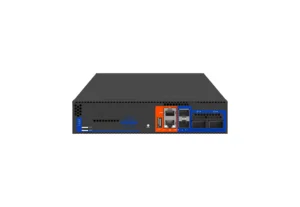
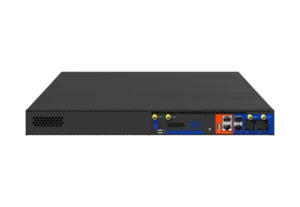
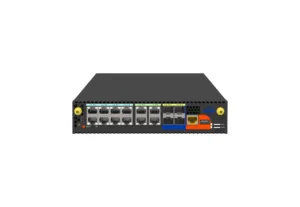
Unlike standard enterprise networks, MDU deployments demand high subscriber concurrency, rigorous network isolation, and flexible per-unit policy enforcement. AsterNOS-VPP pairs an ARM64 architecture with a multi-threaded VPP dataplane to address these core MDU requirements:
- Subscriber Isolation: 802.1Q VLAN and QinQ provide dedicated, tenant-level logical segmentation.
- Per-Subscriber QoS: Hierarchical rate limiting and traffic shaping ensure predictable bandwidth distribution across residential units.
- Carrier-Grade NAT (CGNAT/SNAT): High-throughput address translation optimizes limited public IPv4 pools.
- Subscriber Access & AAA: DHCP Relay with Option 82 and RADIUS integration streamline authentication, identification, and accounting.
- Edge Routing & Peering: Enterprise BGP support handles carrier uplinks and large routing tables reliably.
- IPv6 Transition: Native IPv6 stack with DHCPv6 Server/Relay provides a smooth migration path for residential broadband.
Below are the most frequently asked technical questions regarding AsterNOS-VPP’s current GA capabilities, deployment flexibility, and centralized management.
Part 1. BNG, Subscriber Management and Traffic Control
Q1. Does AsterNOS-VPP support DHCP Relay with Option 82 and RADIUS Authentication/Accounting per subscriber?
Yes. Both capabilities are supported.AsterNOS-VPP supports DHCP Relay with Option 82, enabling ISPs to identify subscriber access locations and associate DHCP requests with specific access devices or network interfaces. It also supports RADIUS Authentication and Accounting for subscriber management, allowing service providers to integrate subscriber authentication and accounting into their existing AAA infrastructure. These capabilities are particularly useful for ISP access networks, broadband subscriber management, and BNG deployments.
Q2. Does AsterNOS-VPP support per-subscriber rate limiting and traffic shaping for more than 1,000 subscribers?
Yes. AsterNOS-VPP provides a hierarchical QoS (HQoS) framework supporting rate limiting and traffic management at multiple levels:
- User group-level rate limiting
- Individual subscriber-level rate limiting
- Per-subscriber queue management
The architecture supports deployments involving 1,000+ subscribers.
How is traffic shaping implemented?
Traffic shaping and policing are performed dynamically within the multi-threaded VPP software dataplane rather than relying on hardware-based egress queues. This software-based approach provides flexibility for implementing subscriber-specific bandwidth policies and hierarchical traffic management.
Q3. Does AsterNOS-VPP support Source NAT (SNAT) / CGNAT at 10G+ throughput with more than 1,000 subscribers?
Yes. AsterNOS-VPP supports multi-threaded Source NAT (SNAT), with throughput exceeding 10 Gbps.
Its software dataplane architecture enables service providers to deploy Carrier-Grade NAT (CGNAT) for large subscriber environments while maintaining high forwarding performance. This is particularly relevant for ISPs managing IPv4 address exhaustion and large-scale broadband access networks.
Q4. Can the platform support more than 1,000 VLANs, with one VLAN assigned to each subscriber or access unit?
Yes. AsterNOS-VPP supports standard IEEE 802.1Q VLAN sub-interfaces and 802.1ad QinQ encapsulation.It supports the standard 802.1Q VLAN ID space, with up to 4,094 usable VLAN IDs.This allows service providers to implement VLAN-based subscriber isolation, service differentiation, and access network segmentation.
Q5. Does AsterNOS-VPP support IPv6 and DHCPv6 Prefix Delegation (PD)?
Partially supported, with some subscriber-edge capabilities still undergoing validation or development.
Current IPv6 capabilities include:
- Core IPv6 protocol stack
- DHCPv6 Server
- DHCPv6 Relay
For subscriber-edge BNG integration, the current status is:
| Feature | Status |
|---|---|
| Core IPv6 stack | Supported |
| DHCPv6 Server | Supported |
| DHCPv6 Relay | Supported |
| DHCPv6-PD over PPPoE | Supported |
| DHCPv6-PD over IPoE | In active development (End of Q4,2026 will available) |
DHCPv6 Prefix Delegation is important for ISPs providing IPv6 connectivity to residential and enterprise subscribers. The distinction between PPPoE and IPoE integration is important when evaluating deployment readiness.
Part 2. BGP Routing and Network Automation
Q6. Can AsterNOS-VPP handle the full Internet BGP routing table?
Yes. AsterNOS-VPP integrates FRRouting (FRR) for BGP routing and supports a route capacity of more than 2 million routes.
This enables deployment scenarios such as:
- ISP Internet edge routing
- Broadband network aggregation
- Upstream provider connectivity
- Multi-homing and BGP-based traffic engineering
The platform is suitable for service providers requiring large-scale IPv4 and IPv6 routing capabilities.
Table Size: Enterprise SONiC +VPP on Marvell OCTEON CN102/CN103’s System Capacity & Scale Specifications
| Table List | ET2508 / (16GB memory) | ET3608 / (16GB memory) | ET2508 / (32GB memory) | ET3608 /(32GB memory) |
| ASIC | (Marvell OCTEON 10 CN102) | (Marvell OCTEON CN103) | (Marvell OCTEON 10 CN102) | (Marvell OCTEON 10 CN103) |
| MAC | 256k | 256k | 256k | 256k |
| IPv4 Neighbor | 3k static, 128k dynamic | 3k static, 128k dynamic | 3k static, 256k dynamic | 3k static, 256k dynamic |
| IPv6 Neighbor | 3k static, 128k dynamic | 3k static, 128k dynamic | 3k static, 256k dynamic | 3k static, 256k dynamic |
| IPv4 Host Route | 1.2M | 1.2M | 4M | 4M |
| IPv6 Host Route | 1M | 1M | 4M | 4M |
| IPv4 Prefix Route | 1.2M | 1.2M | 4M | 4M |
| IPv6 Prefix Route | 1M | 1M | 4M | 4M |
Q7. Does AsterNOS-VPP support NETCONF, REST APIs, or other programmatic interfaces for network automation?
Currently under active development. REST and NETCONF-based programmatic automation interfaces are under development for an upcoming software release.(End of Q4,2026) At present, administrators can configure and manage the platform through its standard CLI and SSH interfaces.
Part 3. Debian, DPDK and Open-Source VPP Deployment
Q8. Can customers install stock Debian and upstream DPDK/VPP on the ET2500 platform?
Yes, with some important distinctions. Asterfusion supports two deployment approaches:
Option 1: Debian + Asterfusion Open-Source VPP
Fully supported. Customers can run standard Debian Linux together with Asterfusion’s optimized open-source VPP repository, available on GitHub. The repository includes the necessary platform-specific hooks and hardware acceleration bindings for the target platform. This approach provides customers with the flexibility of a standard Linux environment while retaining the platform-specific integration required for optimized networking performance.
Option 2: Debian + Pure Upstream Mainline VPP
The underlying ARM64 Linux environment can boot and run.
However, using pure upstream VPP without Asterfusion’s platform-specific driver plugins requires customers to independently handle hardware acceleration and offload integration.
Therefore, for deployments requiring the integrated hardware acceleration capabilities, Asterfusion recommends using its optimized VPP implementation.
Part 4. Asteria Network Controller and Centralized Management
Q9. Does Asteria Controller support centralized management of ET2500 running AsterNOS-VPP?
Partially. Asteria Controller currently supports centralized monitoring and device telemetry, providing visibility into ET seires router’s status and operational information.
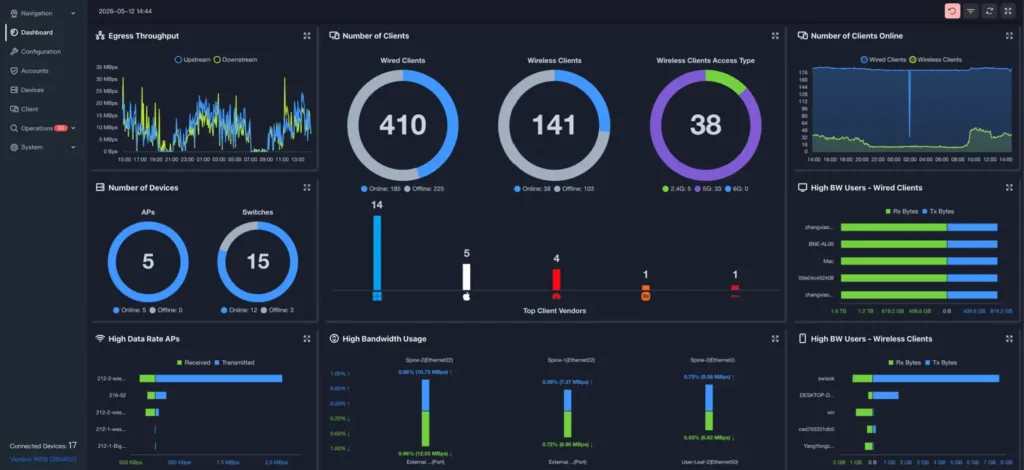
However, some centralized configuration and orchestration capabilities are not yet available in the controller UI. Current capability overview:
| Management Function | Status |
|---|---|
| Centralized device monitoring | Supported |
| Device telemetry and state visibility | Supported |
| Centralized configuration push | Not currently supported |
| Template-based provisioning | Not currently supported |
| Orchestrated firmware upgrades | Not currently supported |
For now, day-to-day configuration and provisioning must be performed directly on the device through CLI. Controller’s centralized configuration and orchestration capabilities is on roadmap.
Conclusion: A Flexible VPP Platform for ISP, Broadband and MDU Networks
AsterNOS-VPP on Marvell OCTEON CN102 / CN103 brings together essential service-provider networking capabilities in a flexible, software-based platform designed for ISP, broadband, and multi-dwelling unit (MDU) network deployments.
Its current capabilities address several key requirements across these environments:
- Subscriber Management: DHCP Relay, Option 82, and RADIUS integration for subscriber identification and access management.
- Traffic Management: Hierarchical QoS (HQoS), per-subscriber rate limiting, and traffic shaping to support differentiated bandwidth policies.
- Carrier-Grade NAT: Multi-threaded SNAT with 10G+ throughput, helping broadband operators manage public IPv4 address resources efficiently.
- Network Segmentation and Scalability: 802.1Q VLANs, QinQ, and IPv6 capabilities to support isolated residential networks and growing subscriber populations.
- Internet Routing: FRR-based BGP with 2M+ route capacity for upstream connectivity and Internet edge routing.
- Deployment Flexibility: Debian Linux and Asterfusion’s optimized open-source VPP, providing flexibility for customized network deployments.
- Centralized Visibility: Asteria Controller monitoring and telemetry for network status and operational visibility.
For ISPs, broadband operators, MSPs, and network integrators, AsterNOS-VPP offers an open and flexible platform for building subscriber-aware broadband networks, managing MDU property connectivity, and deploying edge routing and CGNAT services. It provides an architecture worth evaluating for organizations seeking an alternative to traditional proprietary BNG and routing platforms.
Interested in evaluating SONiC +VPP on Marvell OCTEON CN102/CN103 Platform?
Contact Asterfusion to discuss your BNG, CGNAT, subscriber management, MDU networking, and ISP edge routing requirements.


