Table of Contents
Two Categories of Enterprise SONiC Distribution
Continuing from the previous article, How to Choose the Right Enterprise SONiC Distribution from Different Vendors? (Ⅰ), we grouped Enterprise SONiC distributions into two categories. The last article focused on six vendors that deliver turnkey solutions. This article will continue with an introduction to several major vendors offering software-only Enterprise SONiC distributions.
Software-Only
These vendors sell only the enhanced SONiC software and related services, without binding the solution to specific hardware. Users are free to source any compatible white-box switches (including ODM platforms). This model offers maximum hardware flexibility, but it requires stronger integration and validation capabilities from the user.
Broadcom

1. Product Positioning
Broadcom defines its Enterprise SONiC Distribution as a standardized network operating system built on merchant silicon. It is not a simple repackaging of the community edition; it is a hardened, extended, and commercially supported production-grade release.
Broadcom provides software licensing and support only. Users procure compatible white-box hardware from OEM/ODM vendors such as Edgecore or Celestica, as long as the devices use Broadcom StrataXGS family chipsets. This model achieves full software–hardware disaggregation and gives users substantial flexibility and bargaining power in hardware selection.
2. Pros & Cons
Pros
- Chip-level optimization:
- Broadcom deeply understands its ASICs (Trident, Tomahawk, etc.).
- SAI implementation is standard and efficient, maximizing forwarding performance and bandwidth.
- Production-grade stability & features:
- Offers stricter testing, long-term support (LTS), and features like VXLAN EVPN, Telemetry, ZTP.
- Reduced vendor lock-in:
- Open network approach; any certified Broadcom-based hardware can be used.
- Highly standardized & programmable:
- Containerized architecture with standard APIs, ideal for DevOps automation and large-scale integration.
Cons
- Hardware ecosystem limited:
- Only supports Broadcom ASICs; cannot use Marvell, Nvidia, or Intel chips.
- Heavy system with high learning curve:
- Designed for large-scale Fabric; overkill for small campus or edge networks.
- Dependent on integrators or user expertise:
- No hardware sold; troubleshooting may require coordinating software and ODM hardware separately.
- High skill requirement for operations:
- Requires strong Linux, automation, and networking skills; not suited for plug-and-play teams.
3. Use Cases
Broadcom Enterprise SONiC Distribution is best suited for the following environments:
- Hyperscale & Cloud Data Centers: Designed for large-scale Leaf–Spine fabrics that require high-density ports, high throughput, and multi-tenant EVPN-VXLAN architectures.
- Large Enterprises and Service Providers: Organizations with extensive network infrastructure that want to reduce TCO through white-box adoption and have the technical capability to integrate open networking solutions.
- Highly Automated AI/HPC Clusters: Environments that need silicon-level optimizations to support high-bandwidth, low-latency, lossless networks, and rely on automation tools for operations.
- Organizations Seeking Maximum Hardware Flexibility: Customers that want to switch freely among multiple ODM vendors and avoid lock-in to a single hardware supplier.
Aviz Networks
1. Product Positioning
Aviz positions itself as a “neutral, one-stop solution,” built around its core platform, ONES (Open Networking Enterprise Suite).
It does not build hardware. Instead, ONES provides unified management for multi-vendor switches and open-source SONiC, offering automation, observability, and commercial support. The goal is to deliver a consistent, production-ready open networking environment, even when the underlying hardware and operating systems are heterogeneous.
2. Pros & Cons
Pros
- Vendor-neutral & unified management:
- Allows mixing white-box devices from different vendors and managing them via the ONES platform.
- Eliminates vendor lock-in, giving enterprises control over hardware choices.
- “One Box” delivery experience:
- Pre-installed software on hardware via distributors (e.g., EPS Global) reduces deployment complexity.
- Open-source solution becomes almost plug-and-play.
- Enterprise SLA & validation center:
- 7×24 support with ~30 min response, addressing open-source support gaps.
- ONE Center provides interoperability testing and migration verification.
- AI & observability:
- Built-in telemetry and real-time alerts.
- Suitable for AI/HPC networks needing fine-grained monitoring.
Cons
- Integration complexity remains:
- Multi-vendor hardware + open-source OS can complicate troubleshooting for low-level driver or compatibility issues.
- Heavy management platform:
- ONES platform is powerful but high learning and deployment cost; overkill for small networks.
- Requires advanced operations skills:
- Teams need NetOps/SDN mindset to fully utilize automation and multi-tenant features.
3. Use Cases
Aviz is best suited for users who value flexibility and advanced capabilities:
- Multi-vendor environments:
- Organizations that already use, or plan to adopt, white-box switches from different vendors and need a unified management platform.
- AI training clusters and cloud-native networks:
- Scenarios that require high-density, high-performance leaf-spine fabrics and demand strong packet-level visibility.
- Mid-to-large data centers and edge clouds:
- Environments that want competitive hardware choices to lower costs while still maintaining enterprise-grade support and SLAs.
- NetOps/SDN-driven engineering teams:
- Teams aiming for “Network as Code,” managing the entire lifecycle through automation tools.
Hedgehog Cloud
1. Product Positioning
Hedgehog is not building a new network operating system. Instead, it uses community SONiC as the foundation and adds a cloud-native management and automation layer on top. Its goal is to make network infrastructure operate like cloud servers — tightly integrated with Kubernetes and able to treat switches, DPUs, and servers as unified cluster resources for automation, elasticity, and multi-tenancy.
In other words, the Hedgehog Enterprise SONiC distribution focuses on management and orchestration, rather than modifying the underlying forwarding engine or protocol stack.
2. Pros & Cons
Pros
- Cloud-native experience:
- Network configuration treated as K8s resources, enabling “Network as Code.”
- Operators manage physical networks like containers (e.g., via YAML).
- Hardware decoupling & neutrality:
- Full OCP standard compliance, supports multi-vendor white-box hardware.
- Eliminates vendor lock-in.
- Automation & dynamic orchestration:
- Supports ZTP and auto-scaling.
- Network adjusts automatically with AI/ML workloads.
- Community compatibility & standardization:
- No kernel modification; keeps pace with SONiC community updates.
- Configurations are standardized and easy to troubleshoot.
Cons
- High technical barrier:
- Requires strong Kubernetes, containerization, and DevOps knowledge.
- Steep learning curve for traditional network engineers.
- Performance limited by native kernel:
- Cannot exceed SONiC kernel forwarding limits; no VPP-level acceleration.
- Dependent on community for low-level bugs:
- SONiC kernel or ASIC SDK issues must be addressed by community or vendor.
- Vertical use-case focus:
- Designed for dynamic cloud; overkill for static campus networks or simple data centers.
3. Use Cases
Hedgehog is best suited for the following cloud-native–first environments:
- AI/ML training clusters and GPU compute centers:
- Traffic patterns change quickly. These environments require a high-performance fabric and automated tuning, and they are often deployed on Kubernetes.
- Distributed edge cloud:
- Sites are numerous and geographically dispersed. A centralized, cloud-native management plane is required for consistent deployment and monitoring.
- Multi-tenant private clouds:
- They need flexible network slicing and resource isolation similar to public cloud environments.
- DevOps-driven engineering organizations:
- Teams that want to remove network silos and integrate network operations directly into their CI/CD workflows.
PLVision
1. Product Positioning
PLVision’s SONiC Lite focuses on SONiC customization, ASIC and platform adaptation, and engineering services rather than delivering a full commercial distribution.
Compared with the community version, SONiC Lite uses fewer system resources and fits cost-efficient access and management switches. It delivers basic L2/L3 features, supports vendor-neutral hardware, and can be customized for OEM/ODM use.
2. Pros & Cons
Pros
- Lightweight and suitable for low-end hardware
- SONiC Lite has a small footprint and runs well on switches with limited CPU, memory, and storage, lowering hardware requirements.
- Vendor-neutral with broad hardware compatibility
- A wide HCL allows deployment on white-box, OEM, and ODM platforms, helping avoid vendor lock-in.
- Lower TCO
- No proprietary licenses and support for cost-efficient hardware reduce both BOM and software expenses.
Cons
- Feature-limited for core or high-performance networks
- It focuses on basic L2/L3 functions and is not designed for large-scale EVPN/VXLAN or high-bandwidth Spine/Core roles.
- Relies on hardware compatibility list
- Stable operation requires hardware included in PLVision’s HCL or custom adaptation.
- Requires learning curve when shifting from proprietary NOS
- Teams need to adapt to open NOS workflows, automation, and compatibility planning.
3. Use Cases
PLVision’s SONiC Lite is suitable for the following scenarios:
- Campus and enterprise access networks
- Ideal for connecting PCs, APs, printers, and IoT devices in large access-layer deployments.
- Edge sites and small data centers
- Suitable for edge nodes or small DCs that need stable L2/L3 without high performance demands.
- OOB and infrastructure management networks
- A good fit for management switches used for device administration and monitoring.
Dorado Software
1. Product Positioning
Dorado Software’s SONiC solution integrates Broadcom’s enterprise SONiC distribution with the Cruz orchestration platform. It supports leaf–spine, super-spine, and DCI designs, and provides centralized management, lifecycle operations, automation, and multi-vendor support. It is used in enterprise, data center, and 5G edge networks to enable open networking and reduce vendor lock-in.
2. Pros & Cons
Pros
- Fabric-level automation
- Cruz Fabric Controller manages the entire fabric—including leaf, spine, VXLAN/EVPN, and DCI—as a single system rather than device by device.
- Centralized visibility
- A unified interface provides topology views, device health, traffic metrics, firmware status, and configuration state, simplifying operations.
- Automated lifecycle operations
- Supports ZTP, workflow automation, bulk upgrades, configuration backup/restore, compliance checks, and telemetry collection.
Cons
- Requires SONiC + Cruz expertise
- Initial fabric design, overlay configuration, and legacy integration require planning and operational knowledge.
- Hardware support depends on drivers
- Only devices with available Cruz device drivers are fully manageable, which limits very new or uncommon hardware.
- Too heavy for small networks
- For small offices or simple access deployments, using Cruz + Enterprise SONiC distribution may add unnecessary cost and complexity.
3. Use Cases
Below are official-recommended scenarios for deploying Dorado’s Enterprise SONiC + Cruz solution:
- Large data centers / cloud / telecom
- Suitable for leaf–spine, super-spine, VXLAN/EVPN fabrics, and DCI in cloud, telecom, or HPC environments.
- Enterprise campus / multi-site
- Enables centralized management across multiple sites and multi-vendor campus networks while avoiding vendor lock-in.
- Edge and remote sites
- Cruz Edge Orchestrator plus SONiC supports automated deployment and monitoring for edge nodes and remote branches.
Here is a comparison table of major Enterprise SONiC distributions for quick reference.
| Vendor | OS Nature / Kernel | Protocol Stack Modified | Management Capabilities | Other Notes | Suitable Scenarios |
| Asterfusion | Based on community SONiC, deeply customized, covering Campus, AI & Data Center, Routing (with VPP) | Yes | Adds different functions according to each distribution | Yes, supports automation and traditional CLI | Integrated hardware/software, all three scenarios (DC/Campus/Routing/NPB2.0) supported |
| Dell | Based on community SONiC, enterprise packaging | No, mainly stability and usability enhancements | Yes, enterprise-level management and global services | Only works with Dell hardware, strong service | Large data centers, AI clusters, traditional large enterprises |
| Edgecore | Hardened community SONiC | Yes | Basic management, closer to native | Wide choice of white-box hardware, cost-effective | Technical teams, labs, small data centers |
| QCT | Hardened community SONiC | Yes, focuses on compatibility and stability | Basic management, closer to native | Cloud-provider hardware, cost-effective for bulk procurement | Hyperscale cloud, AI/HPC clusters |
| UfiSpace | Hardened community SONiC | No | Basic management, closer to native | Telecom-grade hardware, supports 5G/high-precision timing | Telecom operators, 5G, backbone networks |
| Micas | Hardened SONiC + AI scenario tuning | No, mainly parameter tuning | Basic management, closer to native | Optimized for AI/HPC lossless networks | AI training clusters, large-scale GPU interconnects |
| Broadcom | Based on community SONiC, chip vendor optimized | Yes, Broadcom modifies ASIC SDK and SAI affecting the protocol stack | Yes, geared toward large customers and automation | Only supports Broadcom chips, limited hardware choices | Hyperscale data centers, AI/HPC |
| Aviz | Community SONiC + multi-vendor management platform | No, mainly unified management | Strongest management, ONES platform | Can unify multiple white-box vendors, supports multiple SONiC distributions | Multi-vendor mixed networks, AI/cloud customers |
| Hedgehog | Community SONiC + K8s orchestration | No | Strongest cloud-native management, K8s integrated | – | K8s/DevOps teams, AI/ML clusters, distributed cloud |
| PLVision | Community SONiC custom development + ASIC/platform adaptation + SONiC Lite | Yes, customized per customer | Limited management, service-oriented | More service-focused than mainstream distribution vendors | Customers needing SONiC customization, porting, or ASIC adaptation |
| Dorado | Broadcom Enterprise SONiC-based Fabric management + automation | No | Strong management, fabric management / automation | More like a management platform than an independent SONiC distribution | Large-scale Spine-Leaf Fabric, Broadcom customers |
Selection Guide: What Should You Prioritize?
Before making a final decision, evaluate the following key dimensions:
Hardware Compatibility (HCL): Do you prefer an integrated appliance (software + hardware), or do you plan to reuse existing white-box switches?
Note: Pure software distributions offer flexibility, but always verify that your hardware is listed in the vendor’s HCL.
Scenario Fit: Do you only need basic L2/L3 forwarding, or do you require EVPN-VXLAN, RoCEv2 for AI workloads, or advanced routing features such as VPP? Avoid paying for features you do not need, but also avoid minimal builds that lack essential capabilities.
Operations Capability vs. Vendor Support: Does your team include engineers who are comfortable with Linux and Python? If yes, Edgecore or Hedgehog may be a good match. If not, choose a vendor that provides 24×7 SLA-based support, such as Dell or Asterfusion.
Cost Structure: When calculating TCO, consider not only hardware cost but also software licensing and annual support subscriptions.
Ease of Use: Prefer distributions with clear documentation, user-friendly tools, and complete training resources. This helps reduce the learning curve for your IT team.
Conclusion: Which one fits you best?
From the five dimensions above:
If your team has strong operational capability, enough engineering resources, and sufficient development time, and if your whitebox hardware is listed in the Enterprise SONiC distribution hardware compatible list, you can choose a pure software distribution such as Broadcom Enterprise SONiC Distribution or PLVision SONiC. These options are suitable when you plan to build custom features or integrate SONiC deeply into your own environment.
If your priority is the management layer of Enterprise SONiC Distribution, you can adopt different platforms based on your needs:
- Aviz Networks ONES Tool: Unified operations across multiple SONiC NOS vendors, enabling cross-vendor lifecycle management.
- Dorado Software: Focuses on device-level SONiC management and fabric automation for Broadcom-based networks.
- Hedgehog: Manages network intent and configuration, integrates with Kubernetes, and enables Network-as-Code workflows.
Compared with pure software Enterprise SONiC Distribution, integrated hardware-plus-software solutions require fewer prerequisites. The core features are already implemented, and the vendor assumes responsibility for stability and support. You mainly need a capable operations team and a clear deployment plan.
For data centers, large campus networks, AIDC environments, or any production-grade rollout, the choice depends on your business requirements:
- If you need complex border routing or high-performance gateway functions and want to validate VPP routing performance, Asterfusion is the first choice.
- If you want consistent management across your network, Asterfusion offers the most unified experience, while Dell provides strong hardware support and global services.
- If budget is a concern and your team can operate the system without relying heavily on vendor support, Edgecore and similar vendors are suitable.
- For telecom use cases, such as 5G transport and core networks, UfiSpace is a strong option. Asterfusion also supports PTP Class A/C accuracy, meeting strict timing requirements.
Special Recommendation: Why Asterfusion Deserves Attention
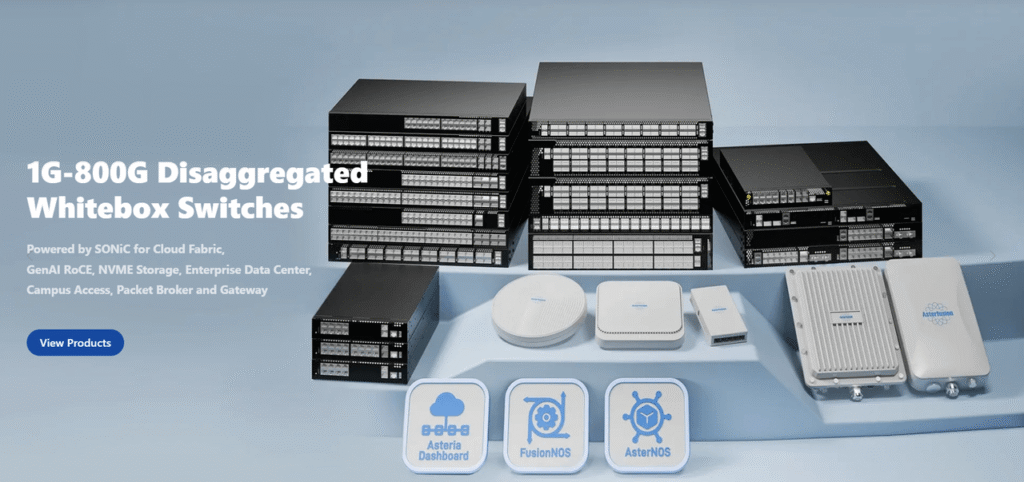
Among many vendors, Asterfusion has taken a unique path with its “full-scenario + integrated hardware–software” approach. For users who need advanced routing capabilities while also wanting unified management across data centers or campus networks, Asterfusion can be one of the most suitable options.
Asterfusion’s strengths come from its three-edition product structure:
- Full-scenario coverage: Beyond the Data Center (DC) edition, they also provide dedicated Campus and Routing variants, enabling a consistent SONiC stack across AI clusters, data centers, campus networks, routing deployments, and open network packet broker scenarios.
- Advanced routing with AsterNOS-VPP: Community SONiC has limitations in complex routing. Asterfusion integrates high-performance VPP (Vector Packet Processing) and delivers AsterNOS-VPP, enabling SONiC to operate as a true border gateway.
- Integrated hardware–software reliability: As a vendor with its own hardware portfolio, from 1G to 800G, they enhance and tune the software stack based on scenario requirements. Hardware and software evolve within the same engineering team, which helps maintain stable and predictable performance.
- Software available as standalone NOS: The software is available independently of the hardware, with three separate editions: AsterNOS_BRCM for Broadcom-based platforms, AsterNOS DC Edition for data center deployments, and AsterNOS_VPP NOS for high-performance routing and border-gateway scenarios.
- Enterprise-grade support system
- Unified documentation: Clear structure, complete examples, and consistent configuration logic, avoiding the fragmented documentation experience of community SONiC.
- Quarterly stability releases: Regular stable branches with patches, feature backports, and bug fixes, giving enterprises a predictable upgrade cycle.
- Dedicated technical support: Support teams formed by R&D, QA, and field engineers. This is not outsourced tier-1 support; issues can be traced and solved at the source.
- Better operational usability: Standard CLI, automation APIs, and template-based deployment help reduce operational complexity, making SONiC practical for production rather than a lab-only platform.
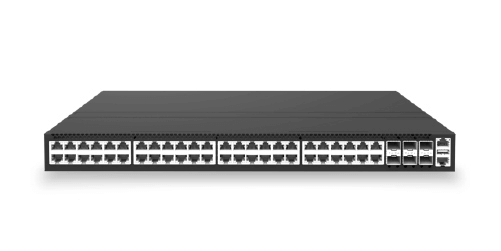
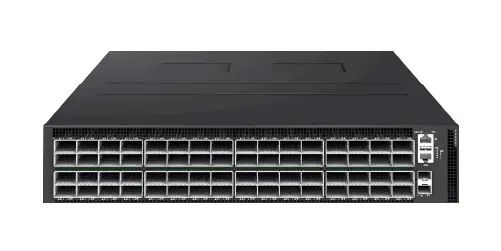
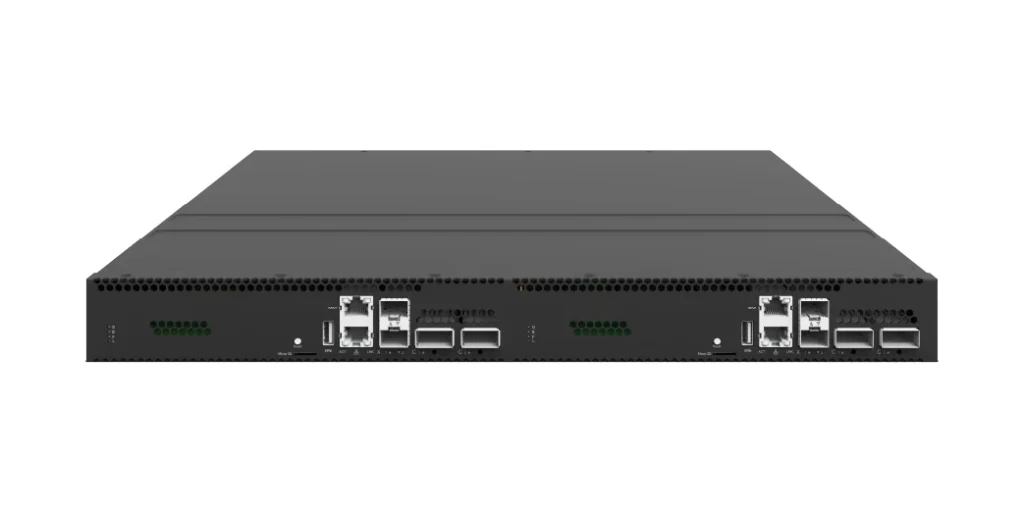

Contact US !
- To request a proposal, send an E-Mail to bd@cloudswit.ch
- To receive timely and relevant information from Asterfusion, sign up at AsterNOS Community Portal
- To submit a case, visit Support Portal
- To find user manuals for a specific command or scenario, access AsterNOS Documentation
- To find a product or product family, visit Asterfusion-cloudswit.ch


