Executive Summary
- Doubled throughput & 10,000-node scale: Upgraded the entire network from traditional 10G to a dual-track 5-stage Pod-based Spine-Leaf architecture with 25G access and 100G aggregation/core, completely eliminating network congestion and TCP retransmissions across 10 fully automated production lines and nearly 10,000 servers booting concurrently.
- Image deployment time reduced by 55%–60%: Download time for the 10GB automated lightweight test image was slashed from 18.5 minutes to under 7 minutes; installation time for the 20GB complete commercial shipment image was compressed from nearly 40 minutes to approximately 15 minutes, doubling overall shipment turnaround.
- Sub-30ms SNMP location query latency: Optimized Control Plane Policing (CoPP) and QoS scheduling to maintain SNMP port-location response latency consistently under 30 ms, completely resolving indicator light flickering and false-positive alarms under high-density concurrency.
- Centralized self-healing & telemetry at scale: Deployed an out-of-band centralized network controller to enable second-level batch policy pushes, plug-and-play provisioning, and nanosecond-level micro-burst hardware telemetry across all 10 production lines and 244+ Leaf-Spine switches.
1. Customer Background: Ten-Thousand-Scale High-Density Automated Manufacturing Challenges
YL is a leading high-tech manufacturer in China specializing in high-end computing equipment, complete-system integration, and industrial digitalization solutions. In the server assembly and delivery workflow, automated burn-in testing (Burn-in Test) and batch shipment imaging (Shipment Imaging) serve as the critical lifeline for verifying hardware reliability and enforcing strict delivery standards.
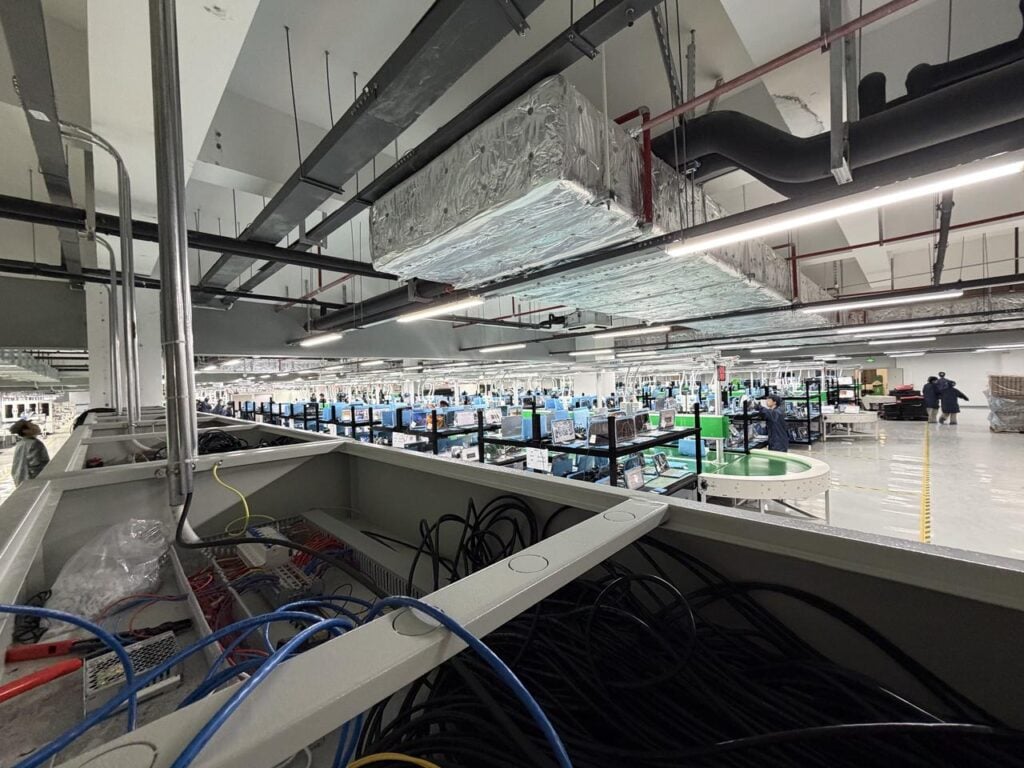
To eliminate labor-intensive manual cable patching, manual order matching, and decentralized testing, YL partnered with an automated burn-in rack vendor to construct a new-generation, ultra-large-scale intelligent burn-in and testing production facility:
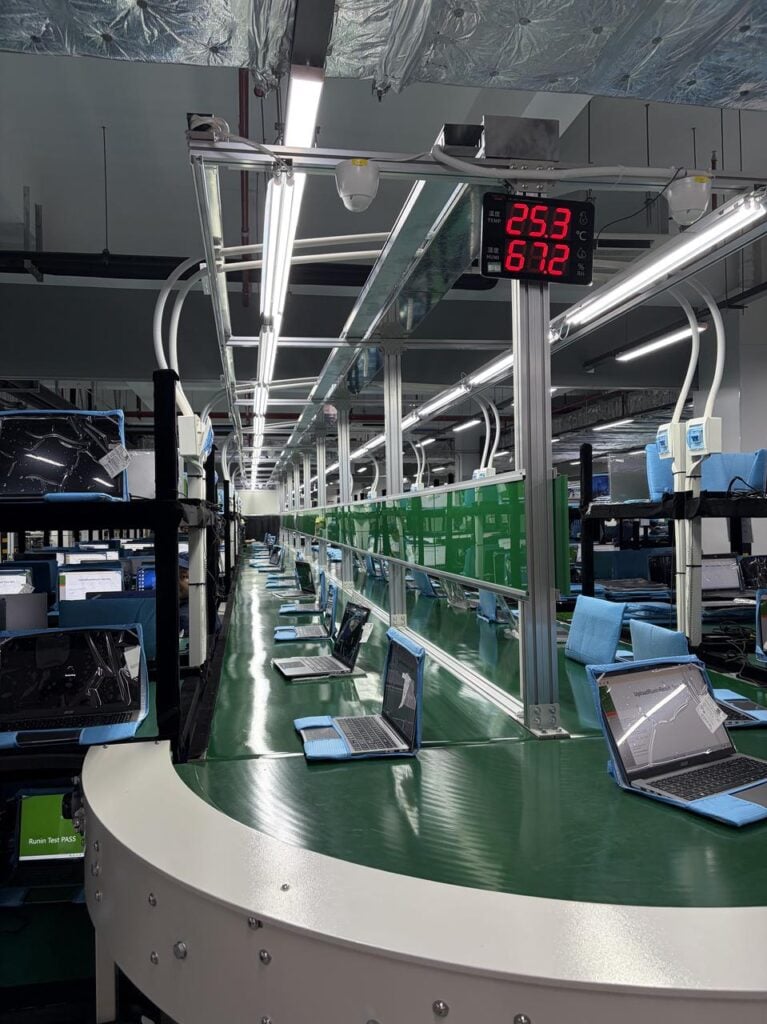
- Production Scale & Line Layout:
- The entire plant plans and operates 10 independent automated production lines;
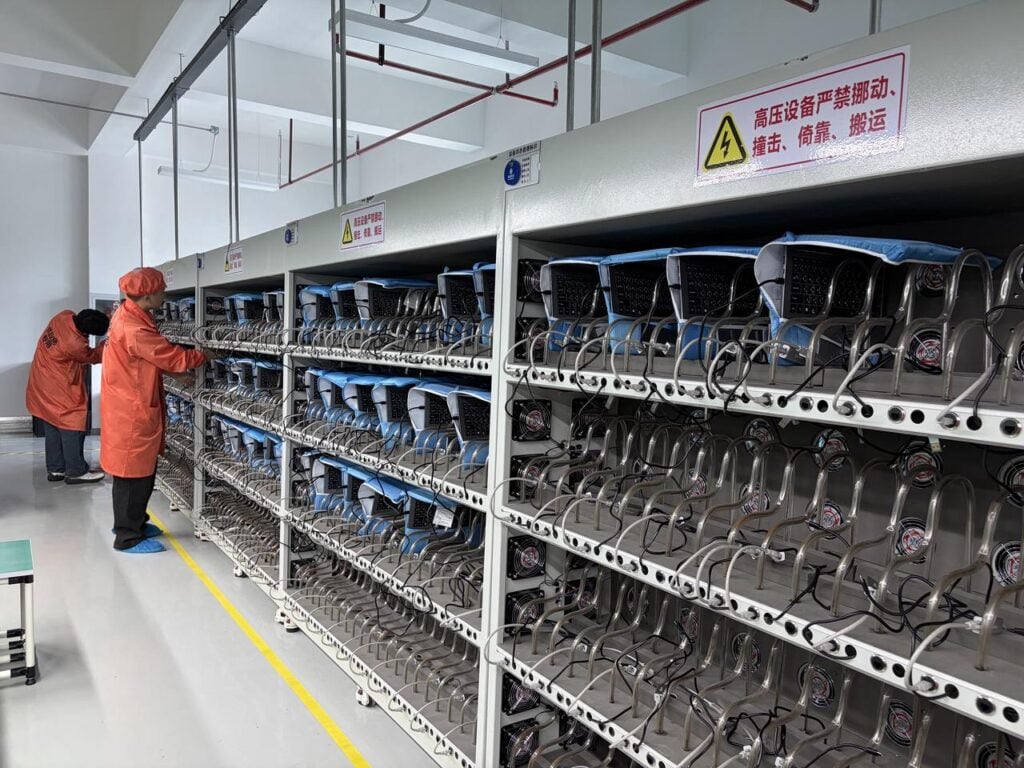
- Each production line features 11 automated server burn-in racks, totaling 110 racks across the facility;
- Each rack uses a 4-tier physical structure with 88 test slots, deployed with 2 Leaf access switches per rack;
- A single line supports nearly 1,000 (968) nodes under concurrent testing, scaling total plant capacity across all 10 lines to 9,680 concurrent test slots served by 220 Leaf access switches.
- Physical Identification & Intelligent Tri-Color Light-Strip Linkage:
- Each tier of the burn-in rack integrates an embedded smart control board driving red, yellow, and green high-brightness LED status strips running across the rack;
- Once a server powers on, automated test scripts issue SNMP queries to obtain its physical port index and LLDP topology from the access switch, reporting physical coordinates and test progress to the control board in real time;
- Tri-Color Closed-Loop Logic:
- 🟡 Yellow: System booting / image downloading / test script executing;
- 🔴 Red: Stress test failed / hardware defect detected (slot automatically locked for repair);
- 🟢 Green: All tests passed (robotic arm automatically unloads the server to packaging).
The network carries two demanding, high-throughput, and burst-heavy manufacturing workflows:
- Download Test (DL Test): Upon hardware assembly, servers boot in batches via PXE to pull a customized ~10GB lightweight test OS image and burn-in stress scripts.
- Download Shipment (DL Shipment): Following successful burn-in, servers transfer to the shipping zone, where the official factory image—containing a full commercial OS, drivers, and customer enterprise environments (up to 20GB)—is flashed in bulk via PXE.
2. Business Pain Points & Architecture Bottlenecks
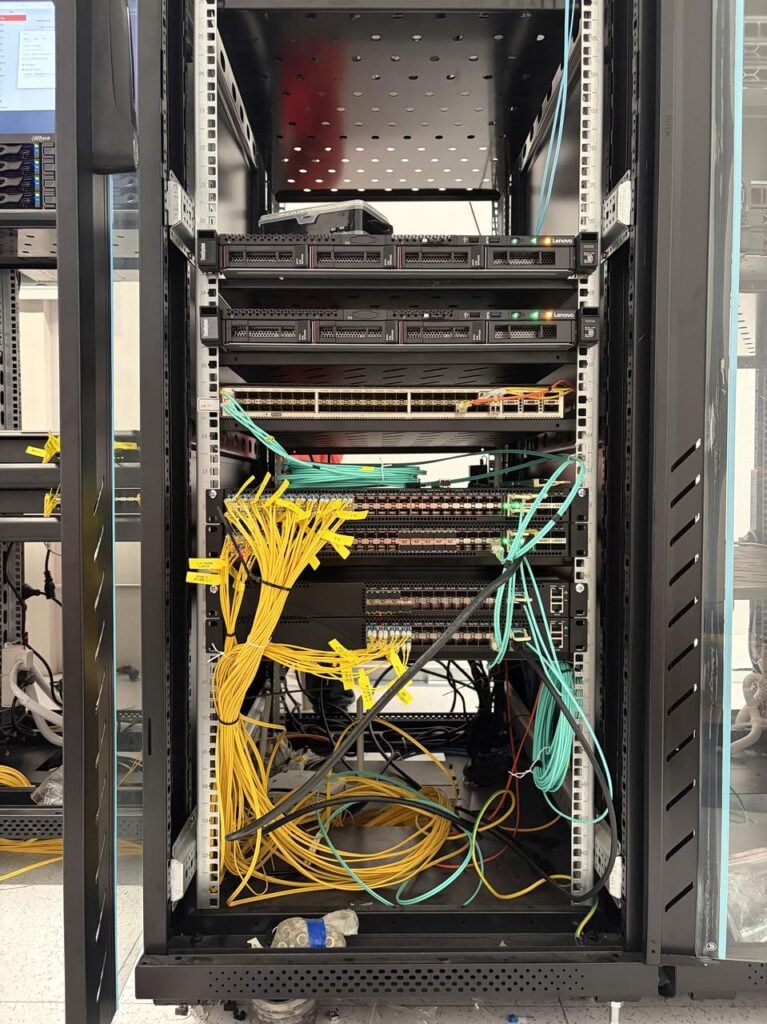
As volume delivery orders surged, the legacy enterprise network architecture became a critical bottleneck during high-density concurrency:
- Instantaneous micro-bursts saturated uplinks, causing widespread PXE timeoutsDuring peak production cycles, hundreds of servers across multiple lines frequently initiated PXE requests within the same second, driving instantaneous throughput to multiple terabytes. With only 10G uplinks at the access layer:
- Burst traffic exceeded 10G physical limits multiple times over, locking switch uplink utilization at 100%;
- Buffer exhaustion triggered heavy tail-drop, exponential TCP backoffs, and dropped throughput below 50 Mbps per server;
- Frequent TFTP/PXE connection timeouts required manual reboots and re-tests on hundreds of nodes daily, severely stalling line operations.
- SNMP topology queries dropped, leading to false alarms on smart light strips:While pulling images, server boot scripts flooded switches with SNMP queries for slot localization. Lacking granular QoS scheduling on the control plane, SNMP packets were squeezed out and dropped by bulk image traffic. As a result, status strips failed to switch yellow in time or falsely flagged red, triggering false alarms in the automated dispatch system.
- Hundreds of discrete devices with no centralized controller or telemetry:Across nearly 10,000 slots and hundreds of switches:
- Firmware upgrades, VLAN configurations, and ACL adjustments relied on manual CLI entry on individual switches, creating operational overhead and configuration drift;
- The absence of hardware-level nanosecond telemetry left micro-burst packet loss untraceable.
3. Asterfusion Campus Swithes Solution: 5-Stage Pod-Based Dual-Track Automated Manufacturing Network
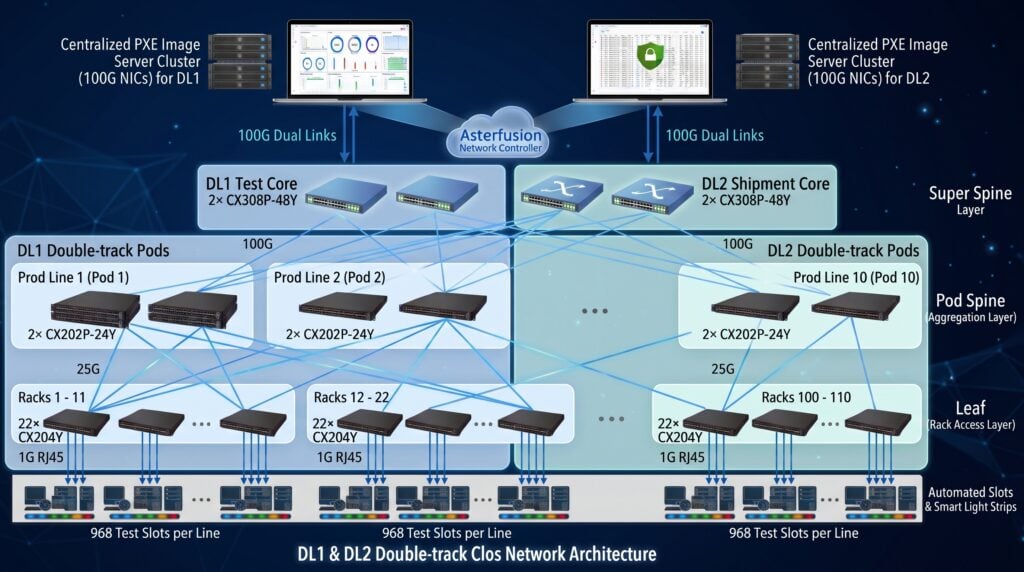
To satisfy demands for high throughput, zero packet loss, low latency, and centralized orchestration, Asterfusion deployed an ultra-reliable, non-blocking 5-stage Pod-based dual-track Spine-Leaf architecture driven by its enterprise network operating system (AsterNOS).
3.1. Physical Domain Isolation & Dual-Track Pod Architecture
The network physically separates traffic into two independent domains—the DL1 Test Cluster and the DL2 Shipment Cluster—with each of the 10 production lines standardized as a self-contained Pod unit:
- Super Spine Core Layer: Features 4 units of Asterfusion CX308P-48Y-M data-center-grade switches (2 allocated to DL1, 4 to DL2). High-density 100GE interfaces connect directly to upstream PXE image servers, using ECMP to create a non-blocking core fabric.
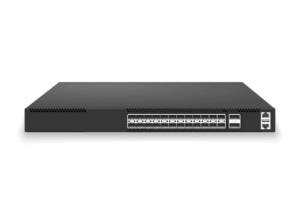
- Pod Spine Aggregation Layer: Each production line operates as an independent Pod equipped with 2 units of Asterfusion CX202P-24Y-M switches (20 units across 10 lines). Each unit provides 22 downlink 25G links to aggregate rack traffic and dual-uplinks via 100GE to the Super Spine core.
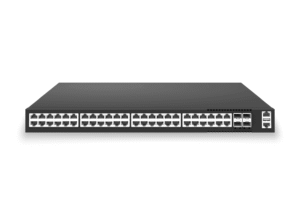
- Leaf Access Layer: Each line deploys 22 units of Asterfusion CX204Y-48GT-M switches (220 units across 10 lines). Each unit provides 48 Gigabit RJ45 copper ports to burn-in rack slots and dual-uplinks via 2*25G to the Pod Spines, scaling uplink capacity by 5x compared to legacy 10G links
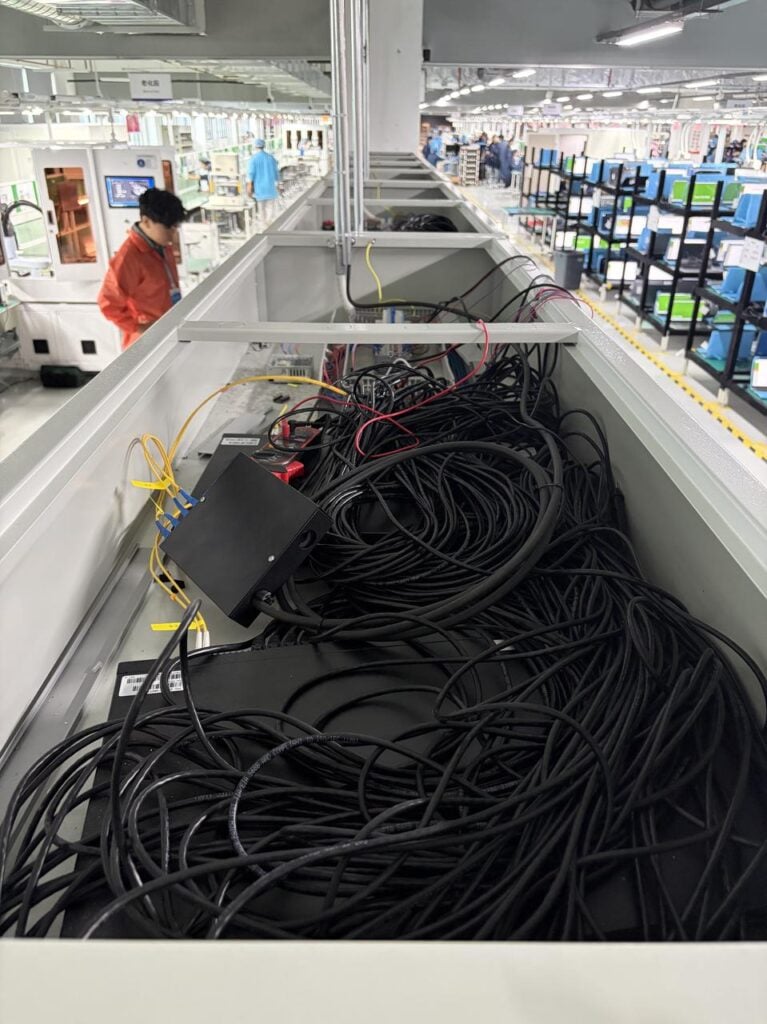
- Out-of-Band (OOB) Management Network: Deploys dedicated Gigabit management switches to maintain complete physical isolation between controller management/SNMP query traffic and high-volume image traffic.

3.2. Asterfusion Unified Network Controller
Centrally integrated into the out-of-band management plane, the controller automates operations across 244+ Leaf-Spine switches:
- Zero-Touch Provisioning (ZTP) & Batch Delivery: Enables plug-and-play expansion and node swaps, pushing VLANs, QoS, rate limits, and port policies plant-wide in seconds;
- Full-Path Micro-Burst Telemetry: Collects buffer watermarks, drop counters, and real-time port telemetry to eliminate network visibility blind spots.
4. Core Technical Advantages
- Hierarchical Non-Blocking 25G/100G Forwarding Absorbs Extreme Concurrency:With 100G links entering the Super Spine and 25G links feeding Leaf switches, large switch packet buffers coupled with intelligent dynamic buffer allocation absorb micro-bursts when thousands of nodes initiate PXE requests simultaneously, preventing buffer drops and TCP backoffs.
- Control-Plane Protection (CoPP) & QoS Ensure Millisecond Light-Strip Sync:AsterNOS prioritizes management and SNMP packets through CoPP and strict hardware priority queuing. Even under saturated data-plane conditions, SNMP port queries are answered within 30 ms, ensuring immediate, error-free feedback across all LED strips.
5. Performance Verification: Before vs. After Upgrade
Comparative test results collected under full concurrent load across the 10 production lines:
| Metric / Scenario | Before Upgrade (Legacy Core + 10G Uplinks) | After Upgrade (Asterfusion 100G Spine + 25G Pod) | Improvement | Production Value |
| DL Test Image (~10GB) | 18 min 30 s (peaked at 22–25 min during congestion) | 7 min 15 s (consistent line-rate delivery) | 60.8% time saved | First-inspection turnaround accelerated by nearly 3x |
| DL Shipment Image (~20GB) | 38 min 40 s (10G links saturated, heavy retransmissions) | 15 min 50 s (stable line-rate batch flashing) | 59.1% time saved | Large-scale pre-installation compressed within 16 min; delivery cadence doubled |
| Massive Concurrent Download Success Rate | 87.5% (~10–15% nodes timed out and required manual retries) | 100% (passed on first boot attempt) | +12.5% | Completely eliminates manual rack inspections and repeated testing |
| SNMP Port-Location Query Latency | 800 ms ~ 3500 ms (frequent drops and timeouts under concurrency) | < 30 ms (sub-millisecond replies) | 90%+ faster response | Status lights refresh instantly; zero slot false alarms |
6. Customer Feedback & Business Value
“This network architecture upgrade removed our largest throughput hurdle across our automated production lines. In the past, running batch burn-in across multiple racks completely maxed out our 10G uplinks, leaving technicians waiting by racks for nearly an hour while checking for timed-out slots.
Deploying Asterfusion’s 25G/100G architecture cut image deployment times by over half and drove concurrent download success to 100%. More importantly, the centralized controller allows our operations team to manage and monitor all 244+ switches from a single pane of glass, making one-click policy distribution and instant status awareness a reality for agile, high-turnover smart manufacturing.”
— Head of Network & Systems Engineering, YL Automated Production Lines
- Doubled Factory Throughput: Full-system image deployment dropped from nearly an hour to under 20 minutes, accelerating line cadence and ensuring reliable delivery schedules.
- Resilient Hardware–Network–Slot–Indicator Closed Loop: Sub-30ms SNMP response times and dedicated QoS queuing eliminate erroneous slot evaluations, ensuring deterministic automation behavior.
- Automated Centralized Operations: Replaced manual CLI inputs with centralized zero-touch provisioning and deep telemetry across 244+ network nodes, improving network operations efficiency by over 70%.
- Seamless Modular Expansion: The standardized Pod structure enables easy scale-out—expanding capacity requires only adding modular Pod units to the Super Spine without altering the core network fabric.
As the manufacturing of computing equipment accelerates into massive ten-thousand-node deployments and Industry 4.0 automation, network infrastructure has evolved from a simple data transmission channel into a core driver of factory production tempo. The successful upgrade of YL’s ten-thousand-slot automated production lines proves the exceptional throughput and enterprise-grade reliability of a 25G/100G open networking architecture in industrial automation and smart manufacturing environments. Through this systematic architectural overhaul—combining physical dual-track isolation, tiered convergence, prioritized traffic scheduling, and centralized out-of-band management—Asterfusion not only dismantled the throughput bottlenecks caused by instantaneous micro-bursts, but also established a standardized, data-center-grade network foundation built for complex, high-cadence flexible manufacturing with seamless scale-out capabilities.


