Table of Contents
Introduction
Within the traffic engineering domain, RSVP-TE is a traffic engineering protocol built on MPLS forwarding. MPLS serves as the data plane, while RSVP-TE operates as the control-plane signaling protocol.
With the emergence of SRv6, the control plane and data plane are more tightly unified. In the data plane, MPLS label forwarding is replaced by native IPv6 packet forwarding. In the control plane, SRv6 uses extended IGP protocols such as IS-IS or BGP to advertise and distribute SIDs.
This article compares RSVP-TE vs. SRv6-TE, and shows the value of migrating from RSVP-TE to SRv6-TE in modern networks, including protocol stack simplification, scalability, programmability, and cloud-network convergence.
Further reading: understand how SRv6 works (Ⅰ, Ⅱ, Ⅲ)
What is RSVP-TE
RSVP-TE(Resource Reservation Protocol-Traffic Engineering) is the core signaling protocol for MPLS traffic engineering. In simple terms, MPLS defines how packets are forwarded through labels, while RSVP-TE tells the network how the label-switched path should be built and how much bandwidth should be reserved.
It is an extended resource reservation signaling protocol designed to establish constrained Label Switched Paths (LSPs) in MPLS networks, based on requirements such as bandwidth, explicit path, and latency. Traditional IGP routing, such as OSPF or IS-IS, selects shortest paths only, which can lead to link congestion. RSVP-TE allows administrators to engineer traffic paths manually, improving load balancing and QoS assurance.
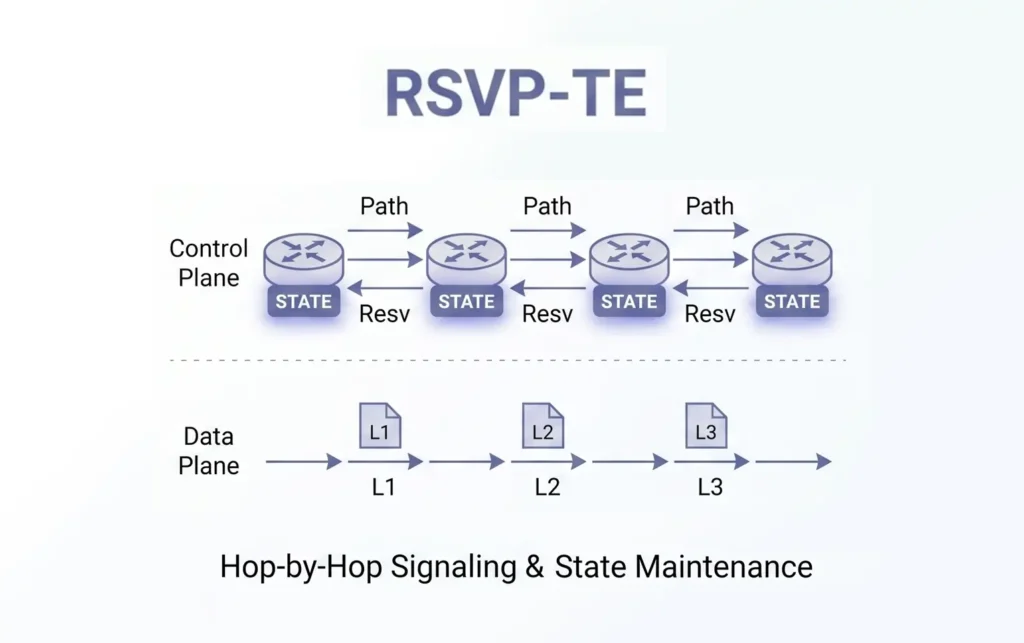
It is mainly deployed in service provider backbones, metro networks, and high-end enterprise routers. It operates in the MPLS control plane as a signaling protocol between routers. When a service requires guaranteed transport, such as voice or video, or when traffic engineering policies are needed, the ingress node initiates Path messages to establish the tunnel.
The main advantages and limitations of RSVP-TE are as follows:
| Dimension | Advantages | Limitations |
| Traffic control | Hard guarantees: hop-by-hop resource reservation enables precise bandwidth assurance and QoS control. | High state overhead: each node along the path must maintain per-tunnel state (soft-state), resulting in poor scalability. |
| Path constraints | High maturity: supports complex explicit route objects (ERO) and multi-constraint computation (bandwidth, priority). | Heavy signaling: relies on periodic Path/Resv message exchanges, leading to significant signaling overhead in large-scale networks. |
| Protection mechanisms | Strong FRR capability: supports Fast Reroute and enables sub-50 ms failure recovery. | High configuration complexity: hop-by-hop signaling makes configuration and troubleshooting difficult, increasing operational burden. |
| Evolution capability | Broad compatibility: natively supported by most existing MPLS network devices. | Closed architecture: difficult to integrate with modern cloud-network environments and API-driven orchestration systems. |
Core pain points: why RSVP-TE is being replaced by SRv6
Scalability bottleneck of hop-by-hop signaling: As network scale increases in terms of nodes and tunnels, the cost of maintaining and synchronizing state across the entire network grows non-linearly. When the network reaches thousands of devices and tens of thousands of tunnels, the protocol stack of RSVP-TE becomes a performance bottleneck.
Operational complexity and control-plane stress: Each tunnel requires hop-by-hop negotiation. In unstable link conditions, large volumes of signaling messages can flood the control plane, creating a signaling storm that impacts network stability and convergence.
Lack of end-to-end programmability: RSVP-TE path computation behaves like centralized route planning, where intermediate nodes participate in step-by-step path setup. In contrast, SRv6 follows an end-to-end model, where the packet carries its own forwarding instructions, similar to a “source-routed map.” SRv6 exposes network behavior as programmable functions (SIDs), which RSVP-TE cannot achieve.
What is SRv6-TE
SRv6-TE (Segment Routing over IPv6 Traffic Engineering) is a traffic engineering solution built on the IPv6 data plane. It embeds an ordered instruction set into the IPv6 packet header, steering traffic along a predefined explicit path.
It uses the IPv6 extension header (Segment List) to control packet forwarding. This design addresses congestion caused by traditional IGP shortest-path routing and enables fine-grained service requirements such as bandwidth, latency, and SLA control. It is widely adopted by large cloud providers, backbone operators, and data center interconnect (DCI) architects. The model is primarily implemented at SRv6 edge nodes (head-end), where traffic is steered into the network.
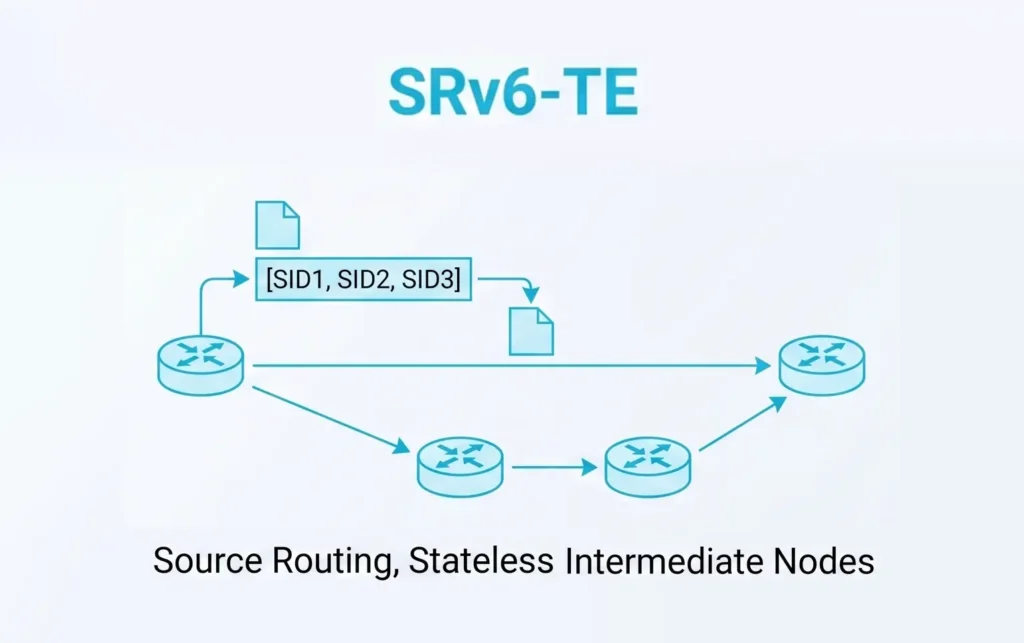
Although SRv6-TE increases packet header overhead due to encapsulation, it removes the need for per-tunnel state maintenance on intermediate nodes. This significantly improves overall network scalability.
The advantages and limitations of SRv6-TE are summarized below:
| Dimension | Advantages | Limitations / Challenges |
| Scalability | Stateless forwarding: intermediate nodes do not maintain tunnel state, enabling large-scale network deployment. | MTU overhead: the SRH (Segment Routing Header) increases packet size and may trigger MTU violations and fragmentation. |
| Flexibility | Strong programmability: SIDs can represent specific services (e.g., firewall, load balancing), and support service function chaining (SFC). | Hardware requirements: requires strong IPv6 extension header processing capability on forwarding ASICs in transit nodes. |
| Path control | Explicit path steering: fully controlled by the head-end, enabling precise traffic engineering and load balancing. | Configuration complexity: policy definition relies more heavily on controllers for automation and path computation compared to RSVP-TE. |
| Compatibility | Native IPv6 design: fully integrated into the IPv6 ecosystem, enabling end-to-end inter-domain and cross-network orchestration. | Migration complexity: interoperability with legacy MPLS-only devices requires dedicated interworking mechanisms. |
SRv6-TE fundamentally transforms traffic engineering from signal-driven tunnels into explicit instructions carried within IPv6 packets. This marks a key architectural shift in networking, moving from a communication-centric model to a programming-driven model.
RSVP-TE vs. SRv6-TE: Key Differences
From a traffic engineering perspective, comparing RSVP-TE and SRv6 is both reasonable and necessary. Both address the same problem: how to steer traffic along a specified path based on service intent, but they use fundamentally different mechanisms to achieve it.
Why compare RSVP-TE vs. SRv6-TE
RSVP-TE is a traffic engineering solution in MPLS architecture. It relies on signaling to establish LSPs, maintains per-path state, and stores a large amount of tunnel information across the network.
SRv6, by contrast, is a source-routing architecture built on IPv6. It encodes path intent directly into the packet, reducing state maintenance on transit nodes and simplifying signaling complexity.
At its core, this comparison is between two traffic engineering paradigms: state- and signaling-driven forwarding versus source-driven explicit path forwarding.
What to evaluate when comparing RSVP-TE vs. SRv6-TE
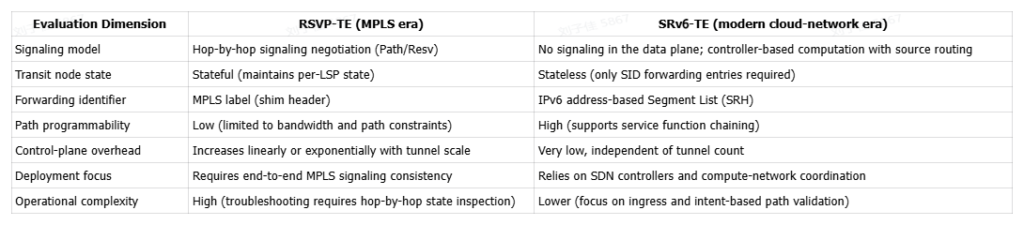
- Path control: from hop-by-hop negotiation to source programming
- RSVP-TE uses a hop-by-hop request–response model. The ingress sends a Path message. Each transit node checks local resources such as bandwidth. If it can reserve resources, it replies with a Resv message. The final path is decided jointly by all nodes along the way.
- SRv6-TE uses source routing. The ingress (or controller) computes the full path in advance and builds a Segment List. The packet carries this “path instruction list”, and each transit node only executes instructions without taking part in path selection.
- Scale and state: from state explosion to stateless forwarding
- RSVP-TE is stateful. Every node must store per-LSP state. When tunnels scale to tens of thousands, CPU and memory usage in the control plane increases heavily and may affect stability.
- SRv6-TE is stateless in the core. Backbone nodes do not store tunnel state. Forwarding load stays almost unchanged even as traffic scales, making it highly suitable for large cloud networks.
- Deployment complexity: from stacked protocols to a unified plane
- RSVP-TE depends on the MPLS stack. It requires LDP, RSVP signaling, and IGP traffic engineering extensions. This creates a complex, layered system.
- SRv6-TE is simpler. It runs directly on IPv6. Traffic engineering is just part of IPv6 packet processing. It removes LDP and RSVP, making the architecture flatter.
- Flexibility and programmability: from fixed tunnels to service chaining
- RSVP-TE behaves like a fixed tunnel. It can guarantee bandwidth and delay, but cannot easily add in-path services like inspection, encryption, or load balancing.
- SRv6-TE is programmable. A Segment ID (SID) can represent a forwarding action or service function. Traffic can be steered through services like firewalls or load balancers. This is a key foundation for cloud-network integration.
- Compatibility and evolution
- RSVP-TE has strong compatibility and works on most existing legacy devices.
- SRv6-TE requires hardware support for IPv6 extension headers. It also shifts operations from manual signaling-based management to controller-driven automation.
Summary
A deep understanding of the fundamental differences in RSVP-TE vs. SRv6-TE is the first step for modern network engineers transitioning from link-centric maintenance to service-centric orchestration.
RSVP-TE, as a product of the MPLS era, relies on a stateful and hop-by-hop signaling model, which increasingly shows scalability limitations under large-scale cloud workloads. In contrast, SRv6-TE introduces a stateless forwarding architecture combined with source routing, effectively removing per-node tunnel state and freeing transit devices from control-plane overhead.
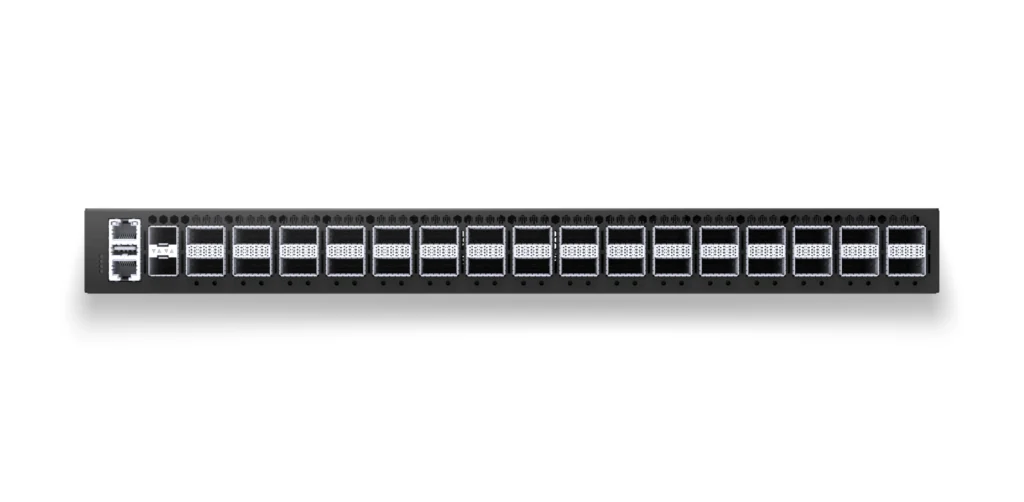
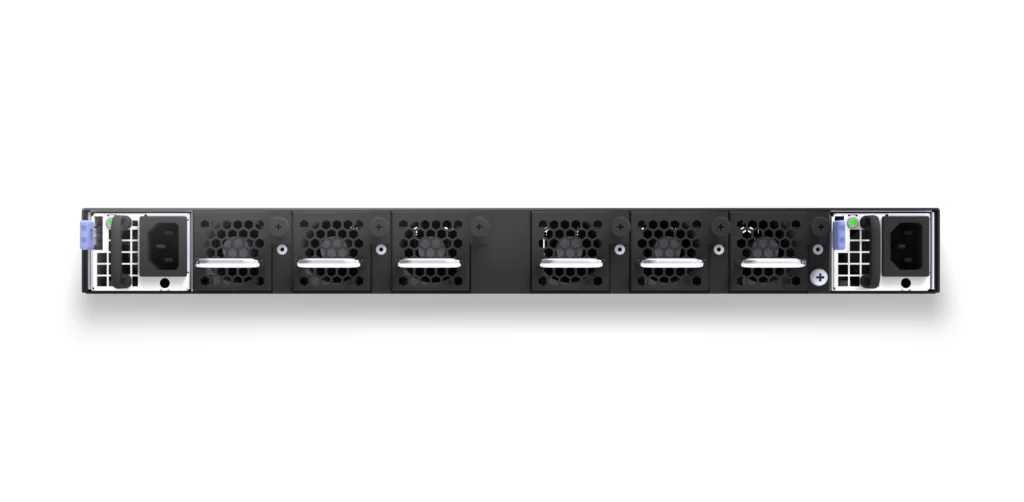
In this context, Asterfusion’s full product portfolio, ranging from 1G to 400G switches, serves as a physical enabler of this transition. SRv6-TE capabilities are embedded down to every port, helping customers build a seamless, intelligent, and streamlined next-generation full-speed compute-network infrastructure.
Request a demo or need assistance ?
Fill out the form, and we’ll reach out to you today !


