Table of Contents
Introduction
First, AES67 and ST 2110-30 are both critical standards for audio networking during the migration from SDI to IP-based workflows. At first glance, they may appear to belong to two separate ecosystems and can even be misunderstood as competing or mutually exclusive standards. However, in real-world deployments, they are not a “one-or-the-other” choice. Instead, they are designed to coexist and work together in different application scenarios.
From an engineering perspective, an audio over IP switch can support profiles based on both standards, including AES67 and SMPTE ST 2059-2. The key challenge is not choosing one standard over the other, but designing clock synchronization, multicast, QoS, and interoperability within the same network infrastructure. This allows each standard to perform effectively in the scenarios where it is best suited.
What is AES 67 ?
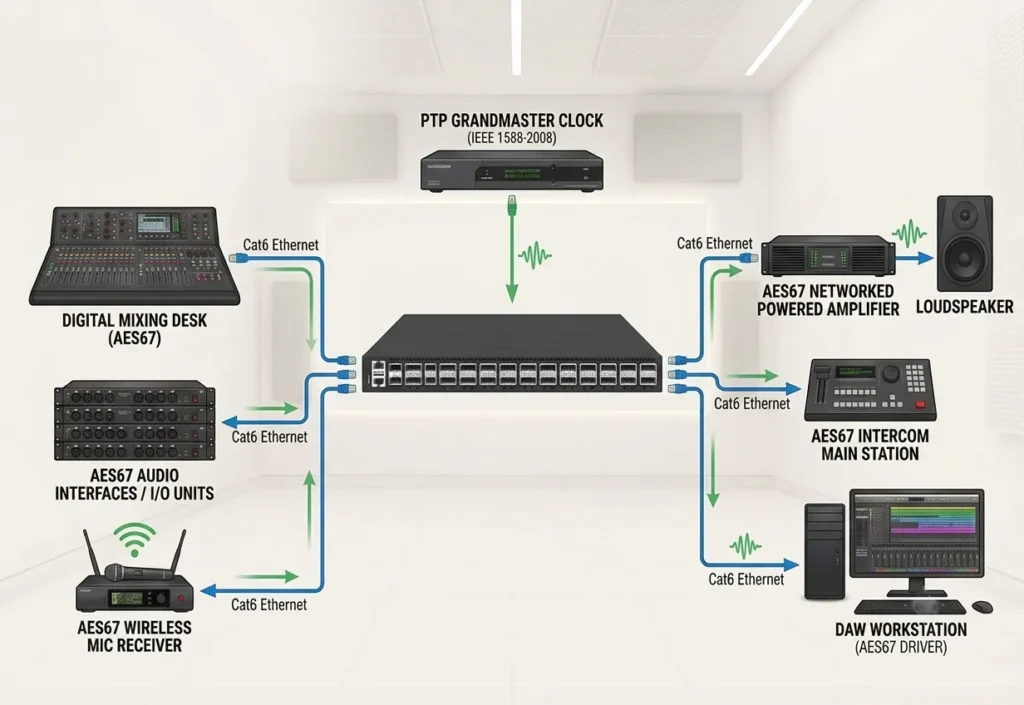
AES67 is a high-performance Audio-over-IP (AoIP) interoperability standard developed by the Audio Engineering Society (AES) and released in 2013, officially known as AES67-2013. It is a general-purpose AoIP interoperability standard designed for various applications, including broadcast, professional audio, live events, conferencing, and installed audio systems.
The goal of AES67 is to enable different audio devices from different vendors and technology ecosystems to achieve high-quality digital audio transmission over the same Ethernet-based infrastructure.
Before AES67 was introduced, the AoIP market was dominated by multiple vendors with their own proprietary protocols and implementations, including:
- Dante (Audinate): A widely adopted AoIP solution with a large market presence.
- Ravenna (ALC NetworX): Commonly used in broadcast environments and applications requiring high real-time performance.
- Livewire (Telos Alliance): Widely deployed in radio broadcast studios.
- Q-LAN (QSC): Designed for QSC’s own audio ecosystem.
These systems were similar to using different languages. For example, if a studio uses a Dante mixing console and a Ravenna audio processing system, they typically cannot exchange audio signals directly. AES67 was introduced to provide a common interoperability layer. As long as devices support AES67, they can exchange audio streams without relying on their original proprietary protocols, enabling interoperability between different AoIP ecosystems.
The Value of AES67 in Real-World Applications
In professional audio and video deployments, AES67 provides value in several key areas:
- True vendor neutrality: AES67 reduces dependency on a single vendor ecosystem. Users can select the most suitable devices based on budget and requirements, such as a microphone preamplifier from one vendor, a digital mixing console from another, and monitoring speakers from a third vendor, as long as all devices comply with the AES67 standard.
- Integration of heterogeneous networks: AES67 enables the integration of AoIP devices from multiple vendors and supports the gradual transition from existing audio architectures to modern IP-based audio networks. It helps connect audio systems with different technologies, generations, and vendor ecosystems within a unified network infrastructure.
- High-performance audio transmission: AES67 defines transmission specifications based on Layer 3 IP networks, such as standard Ethernet switches. It supports high-performance, low-latency, uncompressed PCM audio streams over IP networks.
What is ST 2110-30 ?
SMPTE ST 2110-30 is a key standard developed by the Society of Motion Picture and Television Engineers (SMPTE) and is part of the SMPTE ST 2110 suite of standards. While AES67 focuses on enabling interoperability between different AoIP devices and ecosystems, ST 2110-30 is designed to move audio away from traditional SDI-based workflows and integrate it as an independent media stream within a fully IP-based broadcast production system.
In traditional SDI architectures, audio is embedded within the video signal. The SMPTE ST 2110 suite separates audio, video, and ancillary data into independent Elementary Streams:
- ST 2110-20: Video streams
- ST 2110-30: Audio streams
- ST 2110-40: Ancillary data (ANC)
ST 2110-30 specifically defines the encapsulation, format, and transmission of audio data over IP networks. Its foundation is highly aligned with AES67. In fact, ST 2110-30 adopts many technical specifications from AES67 while introducing stricter requirements for PTP synchronization, clock behavior, packet timing, bit depth, and other parameters to meet the requirements of SMPTE 2110 production environments.
ST 2110-30 in Real-World Deployments
In modern broadcast environments, ST 2110-30 deployments typically have the following characteristics:
- System-wide synchronization (Coherent Plant): In a broadcast studio, not only audio streams but also video streams (ST 2110-20), subtitles, and timecode data (ST 2110-40) are transmitted through the same IP network infrastructure. ST 2110-30 ensures that audio streams remain accurately synchronized with video on the timeline.
- Strict timing synchronization (SMPTE 2059-2): Broadcast workflows have extremely high requirements for audio and video synchronization. In a complete SMPTE ST 2110 production environment, systems use the SMPTE ST 2059 PTP profile to establish a common timing reference for audio, video, and ancillary data. It ensures that all devices within a broadcast facility maintain synchronized timing with nanosecond-level accuracy, regardless of their physical location.
- Multicast-based architecture: Unlike typical audio networks, broadcast networks handle massive media traffic. ST 2110-30 relies heavily on multicast technology, allowing audio streams to be efficiently distributed to multiple receivers, such as mixing consoles, monitoring systems, and recording servers, without consuming excessive network bandwidth.
- Not a simple plug-and-play solution: Compared with the general-purpose interoperability of AES67, ST 2110-30 represents a complete system engineering approach for broadcast production workflows. It requires a robust network infrastructure because audio is only one part of the high-volume media traffic carried across the network.
AES67 vs. ST 2110-30 Comparison
Although AES67 and ST 2110-30 share a strong technical foundation, especially in areas such as media packetization, they serve different purposes in practical deployments. At the technical level, ST 2110-30 is based on a similar RTP/UDP transport mechanism and PTPv2 synchronization approach as AES67, while introducing stricter requirements and constraints for professional broadcast workflows.
In real-world applications, they are more like two different tools designed for different use cases rather than competing standards. Each standard has its own role and application boundaries.
A Quick Comparison of AES67 vs. ST 2110-30:
| Feature | AES67 | SMPTE ST 2110-30 |
| Primary Purpose | Multi-vendor Audio-over-IP interoperability | Uncompressed audio transport in an SMPTE ST 2110 broadcast media system |
| PTP Version | IEEE 1588 | IEEE 1588 |
| PTP Profile | Default profile or AES67 profile | ST 2059-2 profile |
Timing relationship | Designed for professional AoIP interoperability | Requires additional ST 2110 timing constraints, including a defined relationship between the media clock and RTP timestamps |
| Primary Application Scenarios | Cross-vendor interoperability and dedicated audio networks | Large-scale all-IP television studios and professional broadcast facilities |
| System Architecture | Typically deployed as an “audio island” or audio-focused network | Audio and video streams are fully separated and managed within a unified IP media infrastructure |
| Clock Synchronization | Flexible, primarily based on PTPv2 | Strict timing requirements based on SMPTE 2059-2 |
| Core Objective | Solve interoperability challenges and enable devices from different ecosystems to communicate | Build a fully digital, end-to-end media production workflow |
Are AES67 and ST 2110-30 Compatible?
AES67 and SMPTE ST 2110-30 are closely related and can interoperate, but they are not identical standards. AES67 was created as a general Audio-over-IP interoperability standard, while ST 2110-30 defines PCM audio transport as part of a complete SMPTE ST 2110 broadcast media system.
ST 2110-30 builds on the RTP-based audio transport defined by AES67, with additional constraints for broadcast workflows. These constraints are intended to ensure that audio can remain synchronized with ST 2110 video and ancillary data across a common IP media fabric.
In practice, compatibility depends on the operating parameters configured on both endpoints and across the network. Engineers should verify the following before connecting AES67 and ST 2110-30 devices:
- PTP profile and domain: ST 2110 environments use the SMPTE ST 2059 PTP profile, while an AES67 device must support the same timing environment to participate correctly.
- RTP timestamp relationship: ST 2110-30 requires a zero RTP timestamp offset, while a generic AES67 stream may use a non-zero offset.
- Audio format: Confirm the supported sample rate, bit depth, channel count, packet time, and ST 2110-30 conformance level.
- SDP and stream parameters: Receivers must be able to interpret the stream description and the sender must advertise compatible parameters.
- Multicast configuration: Verify IP addressing, IGMP behavior, multicast routing where required, and QoS treatment across the media network.
A useful engineering rule is that an ST 2110-30 sender is designed to be AES67-compatible, but an AES67 sender may require configuration changes before it can operate correctly in an ST 2110-30 environment. Always validate endpoint interoperability and timing behavior in the intended production configuration.
How to Choose Right Standard and PTP Profile ?
Although modern high-performance AoIP switches can support multiple clock models at the physical layer, a production network typically adopts a unified PTP design to avoid mixing different timing domains.
Modern Audio-over-IP switches can support both transmission models. The selection of standards and PTP profiles should be based on the specific application scenario.
AES67: A General-Purpose AoIP Environment for Multi-Vendor Interoperability
If the goal of the system is to achieve interoperability between devices from different vendors, such as in conference rooms, theaters, and educational facilities, AES67 is usually the preferred choice.
AES67 provides broad interoperability and relatively flexible clock requirements. In this architecture, the switch does not need to handle the strict synchronization requirements of broadcast-grade environments. The focus is on wide protocol compatibility and simplified deployment across different AoIP ecosystems.
ST 2110-30: Industrial-Grade Broadcast Production Workflows
When a project enters the core production network of a television station, audio, video, and control data must be managed as a unified media fabric. In this scenario, an industrial-grade approach is required: adopting the SMPTE ST 2059-2 profile as the timing reference for ST 2110-30 workflows.
This is more than a protocol selection. It requires the network infrastructure to provide high multicast throughput, strong jitter tolerance, and nanosecond-level clock synchronization accuracy.
For example, if a switch is designed for general-purpose AoIP applications, AES67 support may be sufficient. However, if it is deployed in a broadcast production network, the switch must support SMPTE ST 2059-2-based timing, high-performance multicast forwarding, and high-precision synchronization capabilities.
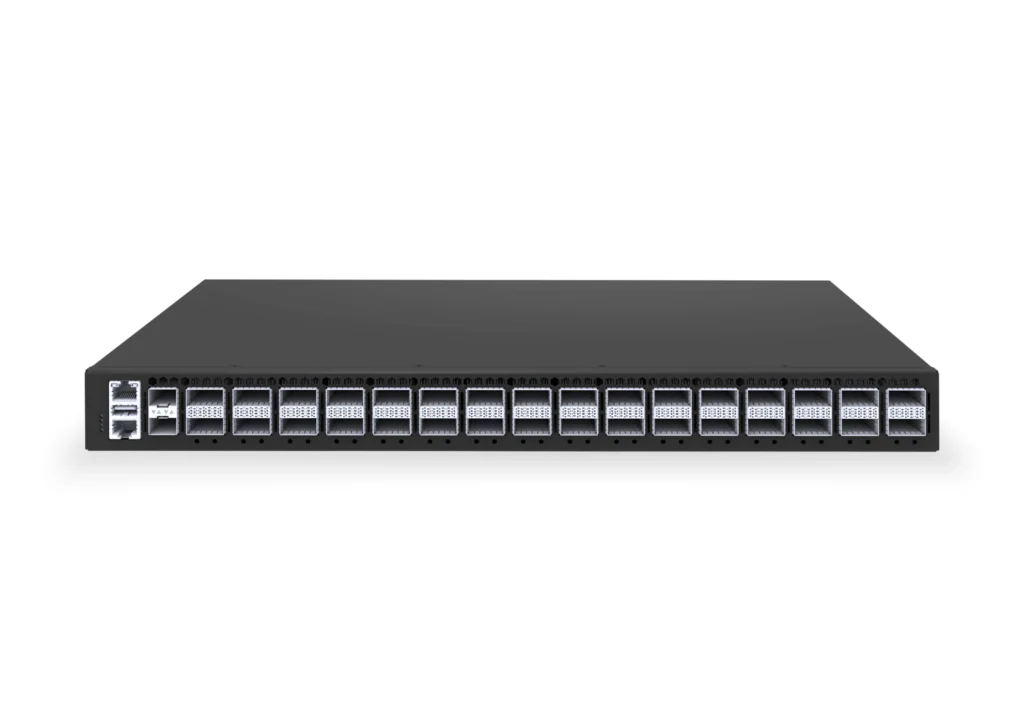
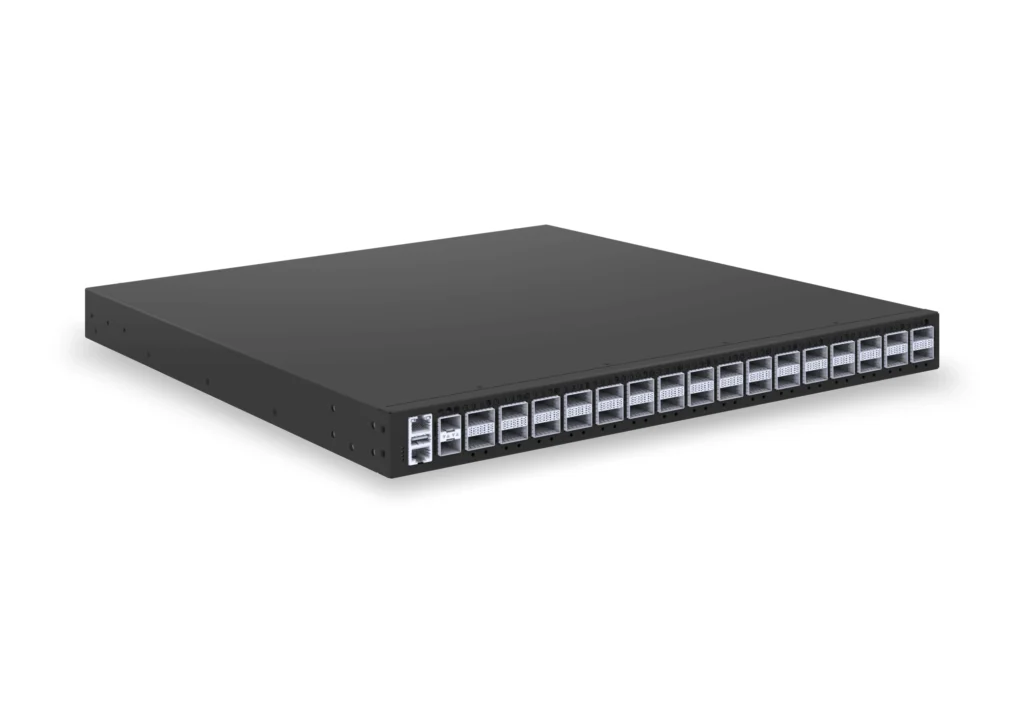
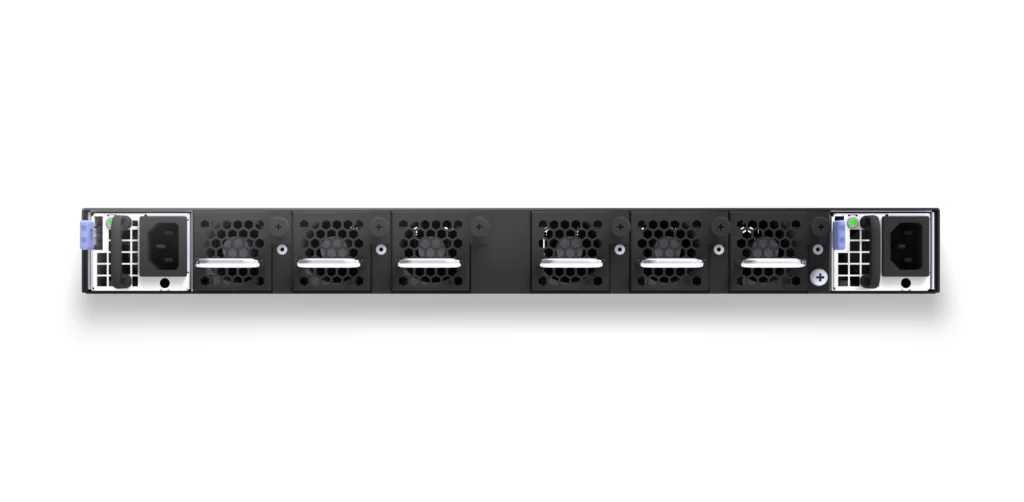
Ethernet Switch Infrastructure for AES67 / ST 2110 Media Networks
If these infrastructure requirements are not met, even a standards-compliant device may behave poorly in production. In many cases, the root problem is the fabric, not the endpoint.
For AES67 / ST 2110 media networks, selecting the right standard is only one part of the design. The Ethernet switch infrastructure must also provide the required performance capabilities to support reliable media transmission.
The most important factors include:
- PTP accuracy: Timing synchronization must be stable enough to support media synchronization requirements, such as Class C PTP with 10 ns-level accuracy.
- Multicast forwarding: Audio streams often rely on efficient multicast distribution. By developing Redis-based multicast control mechanisms, multicast traffic can be managed more efficiently to improve forwarding performance.
- QoS: Traffic prioritization is essential when media streams and control traffic share the same network fabric. A SONiC-based network foundation enables flexible and controllable QoS policies.
If these infrastructure requirements are not met, even standards-compliant devices may experience poor performance in production environments. In many cases, the root cause is not the endpoint device, but the underlying network fabric.
Conclusion
AES67 and ST 2110-30 should not be treated as competing silos. In real deployments, they are often complementary layers in the same audio-over-IP strategy, especially during SDI-to-IP migration.
The right choice depends on the system goal:
- Choose AES67 when interoperability and multi-vendor audio integration are the priority.
- Choose ST 2110-30 when you are building a broadcast-grade 2110 production fabric.
The final decision is not just about audio endpoints. It is about timing, multicast behavior, QoS, switch capacity, and whether the entire Ethernet fabric is ready for SMPTE 2110 media transport.
Other PTP Blogs You Should Read
- What is PTP and How does it Work?
- All PTP Clock Types and How to Configure in Asterfusion
- PTP Profiles for Network Engineers: How to Pick the Best Profile
- AV over IP Switches Enable Cost-Effective Live Streaming Networks
- Why 10ns PTP Switches for Broadcast Are the Industry Gold Standard
- Why PTP Network Switches are Used in Financial Trading?
- PTP Design Best Practices for Media & Entertainment IP Networks
- How to Maintain PTP Time Synchronization During Configuration Changes
Real Case Study:


